


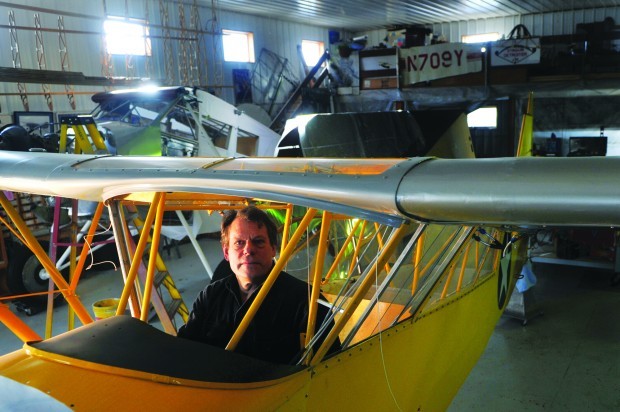
A small “elephant’s graveyard” outside Paul Gordon’s business at the Helena airport is a clue to his work. Skeletons and bones of airplanes resting there once flew. Inside his small blue hangar, as in a dinosaur museum, they rise again, acquire wings, skin, instruments, and ultimately fly away thanks to Gordon’s skills and passion.
Gordon, now 60, had no idea even by age 30 that he’d one day restore antique airplanes. A nurseryman’s son from outside New York City, he built model planes like many kids, and once even got to ride in a small airplane. The only other clues to his future of planes and flying were a love of locomotion and a talent for mechanical engineering. By 19, he was a motorcyclist. By 20, he was welding. He worked on boats — commercial fishing, river rafting — both making his living and tinkering with them. Finally, recession in the 1980s convinced him he needed a trade. He landed at the aviation mechanics school in Helena.
People are also reading…
After his formal schooling, Gordon built some kit airplanes for clients, then bought an old Interstate Cadet and began his education in antique planes by working on it for himself. Generally, that’s how he says he learns, having an idea — “Hey, I could build a fuselage” — and “verifying” it. By now, he has verified his ability to rebuild vintage airplanes — from wrecked pile of junk to fly-away status — 12 times.
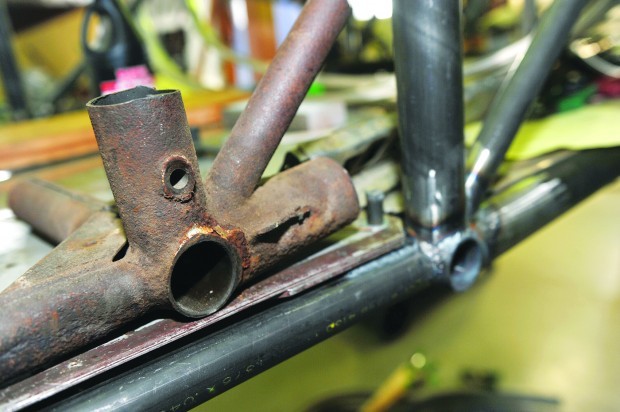
To the untutored, Gordon’s 50-by-50-foot hangar is a jumble. Four airplanes in various stages of assembly occupy the floor space; another, strapped to the loft, projects out above the shop. Old sheets and blankets protect vulnerable places on them. Against a wall, a giant-sized shelf unit holds rusted parts, including wings and tails. When Gordon has no manufacturers’ specs to work from, he uses such parts as models to fabricate new ones. Soon, it becomes evident the hangar is as organized — and clean — as an operating room.
In one corner shielded with furnace filters, he paints, using a spray pot reminiscent of a pressure cooker; at a square metal table, he welds; in another corner, he indulges his hobby, working on old motorcycles, which seems unrelated except for what it teaches him. At the moment, by welding, hammering, and shaping a motorcycle gas tank, he’s actually learning about compound curves — metal that bends twice, in different directions. Rolling trays and tables hold saws and lathes and everything else Gordon needs.
But, he protests, “I’m not a tool junkie,” laughingly comparing tool salesmen, who circulate among businesses like his, to drug dealers. “I’d rather put that money in my projects.”
Slung in a hoist, nose skyward, is a 1941 American Pilgrim — Gordon’s main current paying job, destined for Port Townsend’s Aero Museum in Washington. It’s the second Pilgrim he’s worked on; the first is in an aviation museum in Alaska. Alaska was home to many Pilgrims because an early-day airline flew them. Passenger planes, they were glamorous, with room for nine. When air travel evolved, the Pilgrims’ mission devolved, largely to “fish flying” — getting fresh fish to market. Pilgrims “are a little homely,” Gordon says with affection, “but very cool.
“This one wrecked in a tributary of the Yukon River and sat in tundra for 60 years. It bellied into the side of a hill then slid backwards. The tail ripped off. It was January in Alaska, and the pilot and passenger, unharmed, had 80 miles to walk. They left a note and started walking. A search party found them where they said they’d be. At home, people had divvied up their belongings, because everyone knew they must be dead.” Gordon grins. Stories like this are one reason he likes his job.
Some might say Gordon’s Pilgrim doesn’t look like a plane. After a year and a half of work, its fuselage is an empty framework of thin welded aluminum tubes. Now Gordon’s doing the floorboards. One was good enough to use, but he’ll fabricate the rest. Next it will be the metal underbelly that held suitcases. Aluminum ribs for it wait, stacked beneath the fuselage. Held by one end in one hand, a rib is as light as an empty beer can. “Fragile on the ground, strong in the air,” smiles Gordon. “If airplanes looked as strong as people expected, they’d never fly.”
Heat-treating explains the strength yet feather weight of much of the metal Gordon uses. He subcontracts out that process and many others to small, arcane businesses around the nation, a network of people dedicated, like him, to old planes. In fact, working in Helena, Gordon is isolated — “The West Coast would have been better” — but there are advantages here too, like the affordability of building his own hangar, super-insulated with many windows, allowing him to work by natural light.
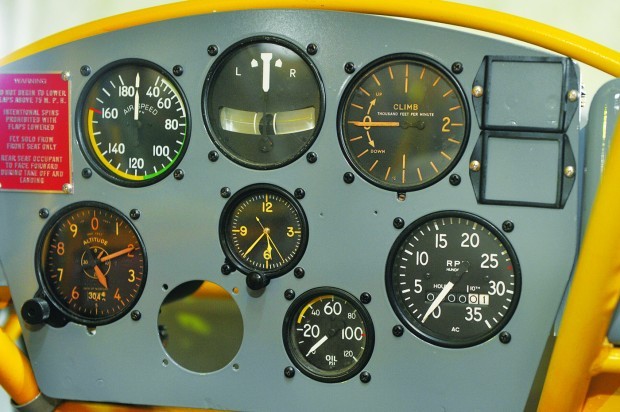
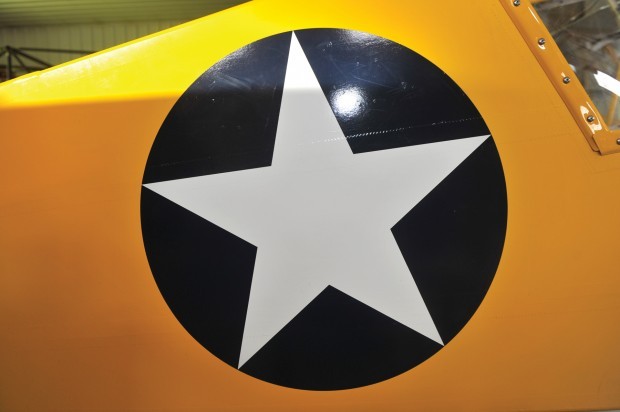
Beside the Pilgrim, two planes near completion are Gordon’s own. For years, working on and flying his own planes and took a backseat to work for clients. Now, Gordon says, “it’s become important to finish my own airplanes.” Farthest along is a 1943 military Interstate L6 painted a rich orange-yellow. Not your typical “warbird” — planes built to kill people no longer interest Gordon — this was an observation plane that “carried the general around”; the cockpit, called a “greenhouse,” is enclosed in cellulose-based plastic.
Gordon’s other plane is larger, a 1929 Stinson. Its wings lean against it, constructed and painted, awaiting attachment. Gordon has rebuilt wings with internal ribs of both metal and wood. Under fabric skin, the ribs are stabilized with wax-impregnated cord. It’s gooey at first then stiffens to the texture of thick dental floss. Gordon estimates he’s tied “thousands and thousands and thousands” of knots in rib lacing cord. They’re hidden under Dacron skin that Gordon fits and sews. Then he irons the fabric to shrink or tauten it. Yes, he irons the plane; one rolling tray holds nothing but household irons, which he buys at thrift stores or gets from his mother. Ironing is followed by nine applications of vinyl-based “dope” to protect the wings, then a painstakingly beautiful paint job. From wire spools spotted in a salvage yard and some rubber boat-trailer rollers, he fashioned a “rotisserie” with which he turns wings during painting.
Despite new, often safer materials, Gordon says a lot of the hand skills he uses haven’t changed in years. Building airplanes is “an old craft,” he says. “That’s what interests me.”
“It’s not quite an art,” he muses, though after renting a corner of his hangar to a metal sculptor for a time, he wondered. They were both “building stuff,” but in Gordon’s work, “form follows function, is more important than how something looks. In art, it’s probably the opposite.”
He looks forward to working on more planes from the 1920s and 30s, aviation’s golden age, a time of optimism and innovation despite the Depression. “Flying fascinated people,” Gordon explains. “Aviators were national heroes. Thousands of people came to air races — they were like the Super Bowl.
“So much of technology now is computer-related — computer-assisted drawing, computer-controlled lathes. On these planes,” he says in contrast, “the mark of someone’s hands is very much there.”
He’s looking forward to flying both his Stinson and his Interstate. He hopes to install a heater in the Stinson. “In Montana, some of the best flying is in the winter. Beautiful cold, calm days. The cooler it is, the wings get more lift, the propellers more power, the engine more thrust, because the air is thicker.”
His planes bear no plaque with his name or his company’s, Gordon Aircraft. He doesn’t believe in that. “My name is in the log book,” he shrugs. The mechanic — in this case, the artist — signs off on everything he does.


