


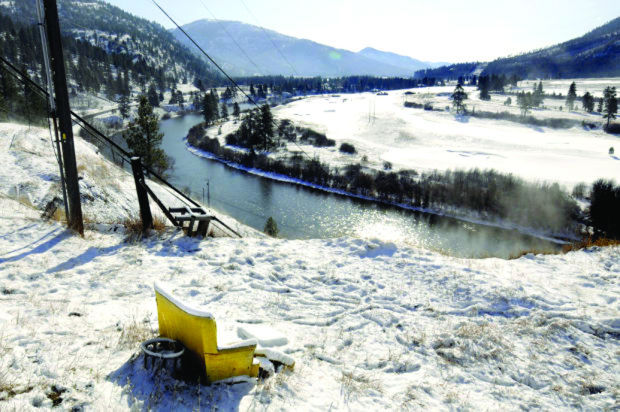
BONNER — From the new overlook above the old Milltown Dam, it takes just a bit of imagination to watch history go by.
Look below and you’ll see the centuries of American Indians make their way up, down and across the rivers. Meriwether Lewis, his men and a dog trot past and disappear up the Blackfoot. John Mullan’s charges from Cantonment Wright build a bridge in the hard winter of 1861-62. Charles Lindbergh comes flying down the Clark Fork Valley in the Spirit of St. Louis, circles Bonner School and drops a leaflet of greeting in 1927.
There goes Art Stone, too.
Perhaps Missoula’s best-known journalist, Stone became the editor of the Missoulian and dean of the University of Montana journalism school. He wrote one of his first “Following Old Trails” columns in 1911 about the road to Bonner, though it never made it into the book by the same name.
People are also reading…
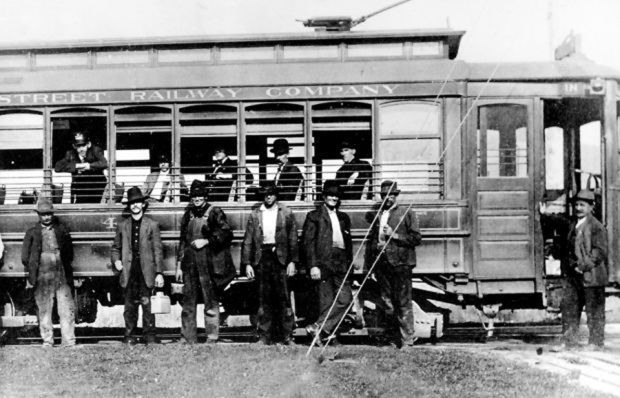
Here he comes in 1892 across Bandmann Flats, riding behind a “sleek, jogging steed” and beside Edward L. Bonner, namesake of the town and co-founder of its immense lumber mill. And there he is on the new electric streetcar in June 1911.
“It used to be a slow hour’s trip to Bonner,” Stone wrote in a Sunday column that appeared in the Missoulian on June 24, 1911. “Tuesday afternoon I stepped into a trolley car at the Masonic temple corner and, all too soon — too soon because the trip was so thoroughly pleasant — the car stopped at the pretty little station in Bonner.”
That trolley, powered by electricity generated by William A. Clark’s Milltown Dam, would be replaced by a larger interurban car that served Bonner for 20 years, until the bus and automobile nudged it out of existence. Late in the 20th century, the big green car was saved from ruin and lovingly restored by Randy Beaudette in Big Sandy. Just last year it was installed in its own display barn at the Historic Museum at Fort Missoula.
“We whisked through the pleasant east end of Missoula, out past the truck gardens and around Jumbo, through East Missoula and along the river, past the Riverside park and the Clark mill — almost completed — across the Big Blackfoot river, and around the big lumber yards into Bonner, where the car halts in the shade of the park that surrounds the Hotel Margaret,” Stone reported.
Gone from that route in the 21st century are the truck gardens east of town, Clark’s Western Lumber Co. mill and the adjacent Riverside Park, which never fulfilled Clark’s dream of being grander than Butte’s Columbia Gardens.
By 1892, Ed Bonner was a powerful man. First and foremost a merchant, he and Richard Eddy founded and, under Andrew Hammond’s management, built what became the Missoula Mercantile into the largest department store between Minneapolis and Seattle.
But the three of them made their real fortunes in the railroad business, particularly with the Northern Pacific. That was the initial push for the lumber mill, and the town of Bonner gained its name because the NP dubbed its signal stop “Bonner Station” in 1885 – a year before the first log was sawed.
Stone was the new Missoula correspondent for Marcus Daly’s Anaconda Standard in 1892, and he was getting his first impression of the area in which he would spend the rest of his life.
“I had never seen a big sawmill then … so Mr. Bonner asked me to go up and look over the plant,” he recalled.
Bonner swung the buggy off the old county road, which by 1892 had been rerouted over a treacherous finger of Mount Jumbo. The NP railroad had usurped the road carved from the base of Marshall Grade.
“That old switchback over Marshall grade was a terror,” Stone wrote. “Nobody ever took it unless he was ignorant of its dangers or was broke and couldn’t pay toll over the Bandmann road.”
Bonner was neither ignorant nor broke. He and Stone took the toll road — the original (1883) NP roadbed and its timber trestles on either end of Daniel Bandmann’s ranch. The first river crossing was 200 yards below the current Bandmann Bridge on Deer Creek Road.
That source of income ended for Bandmann in 1899 when someone burned his toll bridge down. Stone said there was a little-used ferry at the spot in 1911.
Bandmann was an eccentric, internationally known actor who specialized in Shakespearean productions. He’d “retired” to Montana in the late 1880s to scratch an itch to become a man of the land.
He snapped up half a dozen ranches inside the big bend of the Clark Fork River east of East Missoula. An admitted greenhorn, Bandmann tried raising blooded Holsteins, Percheron horses imported from France and exotic breeds of chickens and hogs. Most of his experiments failed, sometimes humorously so, though you wouldn’t have wanted to point that out to his face.
“He was a dreamer, but his dreams, had he been able to bring them all to realities, would have made of that basin one of the loveliest farms in the world,” wrote Stone, who later considered Bandmann a friend.
It’s been almost half a century since the basin was spliced by Interstate 90. The biggest share of it became the Canyon River Golf Club and Community in 2006.
Today, depending on how you hit the lights on Broadway, it’s a drive of 10 to 12 minutes from the Masonic Lodge at 126 E. Broadway in Missoula to the heart of Bonner via Interstate 90.
On your way you’ll pass a string of communities — East Missoula, Pine Grove, West Riverside, Milltown and the road to Piltzville — as well as two churches and Bonner School. None were there in 1892. All were in place when Stone and the streetcar whizzed by 19 summers later.
He mentioned the opportunities that had developed along the road: a “great brick industry” (in East Missoula and on Marshall Grade), and a beautiful ranch home “where nobody but one man ever thought that a farm was possible.” Anton Lerch bought the farm and its graceful brick house at the foot of Marshall Grade in 1899. It remained in the Lerch family until 1974, and was added to the National Register of Historic Places in 1996.
What Stone called “the big power dam of the Missoula Light & Power company” had flooded the “beautiful” McCormick Ranch above the confluence of the Clark Fork and the Blackfoot. As the streetcar scooted across the flats approaching the latter stream, he reminisced on “the toughest piece of road I ever saw” that he’d crossed behind a horse in 1892.
What in June 1911 was Clark’s soon-to-open Western Lumber Co. mill has been replaced on those flats by an interstate interchange, the River City Grill and the busy Town Pump Truck Plaza. The power plant is gone, dismantled brick by brick after the dam was breached five years ago. A task force of locals, historians and preservationists spent much of Saturday thinking up ways to display the original generator and exciters that went into operation in January 1908 in order to power all of Missoula and, in 1910, its electric street car system.
***
“Bonner had just begun to emerge from the uncouthness of a camp into the charm of a model mill town,” Stone recalled of his visit in 1892.
“The beautiful little hotel Margaret had just been finished and the trees and shrubbery in its ideal park were being planted that week. The logs had been cut from the lower canyon and they were driving the river then.”
Nineteen summers later, the last regular log drive down the Blackfoot had ended the week before Stone came to town again.
“A railway is pushing its line up the river to bring down the timber for two great plants instead of one,” he reported. “ Bandsaws have replaced the old circulars; the mills have increased their capacity; the town has grown amazingly — grown larger and grown beautiful. It has been a wonderful change.”
A vacant park is all that’s left of the Hotel Margaret. It was a showcase born of the Gay Nineties and plopped in the middle of a blue-collar working town. By the 1950s it had become outdated and a financial liability to the Anaconda Co. Orders came from Butte to raze the Margaret, and even today residents and former residents of Bonner speak sadly of the grand old hotel’s demolition in March 1957.
For years the grassy park that resulted, diagonally across Highway 200 from the Bonner Post Office and History Center, displayed the 1923 Shay-type locomotive that’s now part of a logging exhibit at the Historical Museum at Fort Missoula.
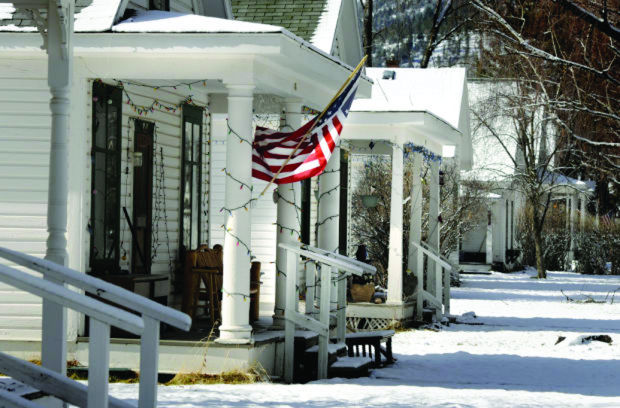
While Stone and unnamed companions waited for the streetcar to start back to Missoula on that bright June day in 1911, they took a stroll around Bonner. The Missoulian editor noted the “beautiful cottage homes,” well-kept lawns and flowers that adorned the town.
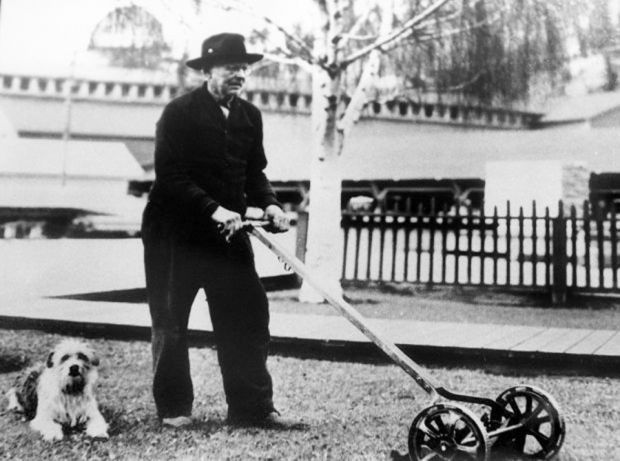
At one of the houses, they encountered a woman pushing a lawnmower.
“As we passed she looked up and smiled,” Stone reported. It’s good exercise, the woman told them, and it makes the place look better.
Ever the promoter, Stone didn’t waste the opportunity.
“That is the spirit of the city beautiful,” he said. “It is a spirit which makes a town better and which accounts in great measure for the splendid progress which Missoula and western Montana are making.”


