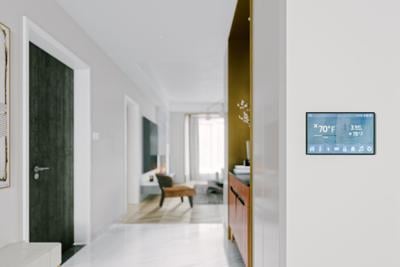


Interior of a modern house with smart automation system.
Military service takes a physical toll that most people outside the community never fully see. Joint injuries, hearing loss, mobility limitations, and the gradual changes of aging all shape how a home needs to function over the long haul. The smart home industry has matured significantly, and many of its most useful upgrades serve aging veterans particularly well — not because they look futuristic, but because they reduce friction, improve safety, and support independence in a home you own on your terms.
This guide covers the features most worth prioritizing, along with practical guidance on how to sequence and budget them.
Why Smart Home Upgrades Matter More for Veterans
Veterans who choose to age in place are making a confident, considered decision. They've navigated far harder environments than a suburban home. But the design of most American houses doesn't account well for the long haul — narrow doorways, hard-to-reach switches, stairs with no alternative, and kitchens that assume a full range of motion.
People are also reading…
Smart technology bridges many of those gaps without a full remodel. A voice-controlled light switch costs a fraction of widening a hallway. A video doorbell sidesteps the need to rush to the front door when mobility is limited. These are practical upgrades that make a home work better for years longer.
In a Rocket Mortgage survey on retirement decisions among military veterans, which polled more than 1,100 active-duty and retired service members and their spouses, access to health care ranked as the top retirement priority — named first by 24% of respondents. Smart home technology can complement that care, especially in the stretches between appointments and before a need becomes urgent.
Voice-Controlled Lighting and Switches
Voice control is one of the highest-impact, lowest-cost upgrades available. Smart switches replace standard wall plates and connect to systems like Amazon Alexa or Google Home, letting you adjust lights in any room without getting up or locating a switch in the dark.
For veterans with limited hand strength, arthritis, or reduced grip from service-related injuries, voice control also removes the physical effort of operating conventional switches. Motion-activated lighting is a useful companion: place it in hallways, bathrooms, and stairwells so any movement at night triggers a light automatically, reducing fall risk without any action required.
Smart Thermostats for Comfort and Health
Temperature regulation becomes more important — and sometimes more difficult — as the body ages. Veterans dealing with circulation issues, certain medications, or service-related conditions may find conventional thermostats require constant manual adjustment.
A smart thermostat learns your schedule and preferences over time, adjusting automatically so the home stays at a consistent, comfortable temperature. Most can also be controlled by voice or phone when leaving a room to change the setting is inconvenient. Some models send alerts if the temperature in the home drops or rises outside a healthy range, which adds a layer of safety for veterans living alone.
Video Doorbells and Smart Locks
Mobility limitations can make answering the front door stressful or even impossible during a difficult day. A video doorbell solves this cleanly: you see and speak with whoever is at the door from your phone or a smart display, with no movement required.
Paired with a smart lock, this combination is even more useful. Caregivers, family members, and home health aides can be granted access with a code or mobile credential, without needing a physical key exchange. You can also lock or unlock the door remotely — helpful when you realize mid-rest that you left the door unlocked and getting up to check isn't easy.
Medical Alert Integration and Sensors
Smart home platforms increasingly support health-focused sensors that can run quietly in the background. Motion sensors placed in key areas — the bathroom, kitchen, bedroom — can detect unusual patterns and alert a family member or care coordinator if something seems off.
Wearable medical alert devices have also improved dramatically and now integrate with smart home hubs. If a veteran falls or feels unwell, help can be summoned with a single button press rather than reaching for a phone. For veterans who want independence without worrying family members, this kind of background monitoring strikes the right balance.
Accessible Kitchen and Bathroom Controls
The kitchen and bathroom are where most home injuries happen, and both benefit from targeted upgrades. Touchless faucets eliminate the need to grip and turn handles, which matters for veterans with hand or wrist limitations. Under-cabinet lighting with motion sensors improves visibility during cooking without requiring overhead light adjustments.
In the bathroom, smart shower controls let you set temperature and flow before stepping in, reducing the risk of scalding or the effort of adjusting under the water. A heated towel rail controlled by a smart plug is a small comfort upgrade that matters more than it sounds during cold mornings when joints are stiff.
Planning and Financing the Upgrades
These features don't need to be installed all at once. A phased approach — starting with lighting and voice control, then moving to thermostats, locks, and sensors — spreads the cost and lets you identify which upgrades deliver the most day-to-day value before moving on.
Veterans who own their homes can also explore financing options to fund improvements without touching retirement income. A home equity loan or cash-out refinance can make a meaningful renovation budget available at terms that work within a fixed-income picture. A lender familiar with VA financing options can help map out what makes sense given your current rate and equity position.