

Get the Best Rest
3 surprising things that can harm the quality of your sleep
Stephanie Vozza
Fast Company
We all know getting a good night’s sleep is important, but knowing and doing are two different things.
Nearly half of American workers report being regularly tired during the day, and 70% are tired after they clock out, according to SleepFoundation.org.
Now might be a good time to consider new habits that encourage better sleep. By making a few simple changes, you might be on your way to more restful sleep.
While adults need at least seven hours a night, these three things you do before bed can hurt the quality of your rest.
1 You use the wrong alarm clock
Most of us need to use alarm clocks to wake up in the morning, particularly to go to work or school. Use the wrong one, however, and you can undo some of the benefits of rest.
“An alarm that sounds at a bad moment for our brain will give you a bad start to the day,” says Jules Goldberg, creator of the sleep app Sleepwave. “Having an alarm go off during a deep sleep cycle can trigger sleep inertia. It’s that feeling of difficulty to move when you’re in a moment of deepest sleep or in the midst of the dream.”
Sleepwave, for example, allows you to set a window of time. Its motion-sensing technology detects your body movements and sounds the alarm when you are in a naturally awakening state.
Another option is to choose a different kind of alarm — one that doesn’t shock you awake and trigger the release of stress hormones. Improve your sleep by choosing a calmer alarm. For example, you can wake to a song that gets progressively louder if left unchecked. Or simply choose an alarm tone that is more pleasing than jarring.
2 You choose the wrong toothpaste
Good dental hygiene includes brushing your teeth regularly, which can include right before bed. However, if you choose your peppermint toothpaste, it could take you longer to fall and stay asleep.
Certified sleep consultant Khaliah Guillory, founder of Nap Bar in Houston, says peppermint is best consumed when you need to heighten your focus and attention.
“Peppermint is a stimulant that can have adverse effects on your sleep, as it is known to increase dopamine,” she told Sleep.com .
“Dopamine, when released in the brain, promotes wakefulness and alertness. This is the total opposite of your intention before bed and a disruptor of your wind-down routine,” Guillory says.
While minty-fresh toothpaste is perfect for the mornings, you might want to have a bedtime tube on hand.
For example, ginger or cinnamon-flavored toothpaste will do the job without stimulating your body. Or Guillory recommends choosing a variety made with lavender, chamomile or jasmine.
3 You check your phone when you wake in the night
According to Reviews.org, 60% of Americans sleep with their phones. For many of us, they’ve replaced alarm clocks. While it makes sense to streamline your nightstand, using your phone as your clock can impact your sleep, too, especially if you wake up during the night, says Nancy Rothstein, Sleepwave’s sleep ambassador.
“Say you get up to go to the bathroom or you’re unfortunately awakened during the night,” she says. “If you look at your phone, you expose yourself to blue light.”
According to SleepFoundation. org, blue light stimulates the brain, making you feel alert. It also can elevate your body temperature and heart rate, which make it harder to fall or stay asleep.
Another reason you should avoid looking at your phone — or any clock, for that matter — is that you’ll likely start doing math, counting how many more hours you have to sleep, which activates your brain, says Rothstein.
“It does take some willpower, but do not look at your phone during the night — period,” she says. “It’s just a big quagmire you’re creating.”
DNA holds key to autoimmune gender gap
Lauran Neergaard
Associated Press
WASHINGTON — Women are far more likely than men to get autoimmune diseases, when an out-of-whack immune system attacks their own bodies — and new research may finally explain why.
It’s all about how the body handles females’ extra X chromosome, Stanford University researchers reported Thursday — a finding that could lead to better ways to detect a long list of diseases that are hard to diagnose and treat.
“This transforms the way we think about this whole process of autoimmunity, especially the male-female bias,” said University of Pennsylvania immunologist E. John Wherry, who wasn’t involved in the study.
More than 24 million Americans, by some estimates up to 50 million, have an autoimmune disorder — diseases such as lupus, rheumatoid arthritis, multiple sclerosis and dozens more. About 4 of every 5 patients are women, a mystery that has baffled scientists for decades.
One theory is that the X chromosome might be a culprit. After all, females have two X chromosomes while males have one X and one Y.
The new research, published in the journal Cell, shows that extra X is involved — but in an unexpected way.
Our DNA is carried inside each cell in 23 pairs of chromosomes, including that final pair that determines biological sex. The X chromosome is packed with hundreds of genes, far more than males’ much smaller Y chromosome. Every female cell must switch off one of its X chromosome copies, to avoid getting a toxic double dose of all those genes.
Performing that so-called X-chromosome inactivation is a special type of RNA called Xist, pronounced like “exist.” This long stretch of RNA parks itself in spots along a cell’s extra X chromosome, attracts proteins that bind to it in weird clumps, and silences the chromosome.
Stanford dermatologist Dr. Howard Chang was exploring how Xist does its job when his lab identified nearly 100 of those stuck-on proteins. Chang recognized many as related to skin-related autoimmune disorders — patients can have “autoantibodies” that mistakenly attack those normal proteins.
“That got us thinking: These are the known ones. What about the other proteins in Xist?” Chang said. Maybe this molecule, found only in women, “could somehow organize proteins in such a way as to activate the immune system.”
If true, Xist by itself couldn’t cause autoimmune disease or all women would be affected. Scientists have long thought it takes a combination of genetic susceptibility and an environmental trigger, such as an infection or injury, for the immune system to run amok. For example, the Epstein-Barr virus is linked to multiple sclerosis.
Chang’s team decided to engineer male lab mice to artificially make Xist — without silencing their only X chromosome — and see what happened.
Researchers also specially bred mice susceptible to a lupus-like condition that can be triggered by a chemical irritant.
The mice that produced Xist formed its hallmark protein clumps and, when triggered, developed lupus-like autoimmunity at levels similar to females, the team concluded.
“We think that’s really important, for Xist RNA to leak out of the cell to where the immune system gets to see it. You still needed this environmental trigger to cause the whole thing to kick off ,” explained Chang, who is paid by the Howard Hughes Medical Institute, which also supports The Associated Press’ Health and Science Department.

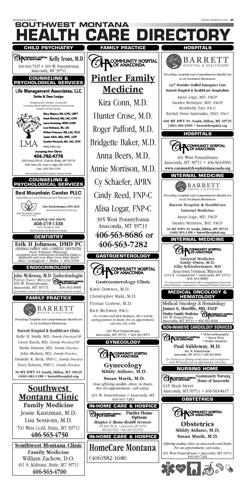
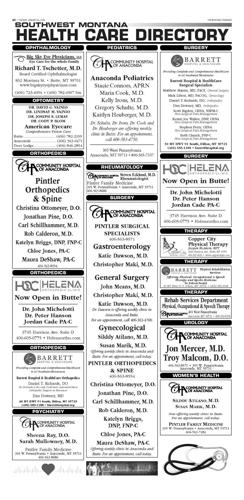
Southwest Montana Health Care Directory