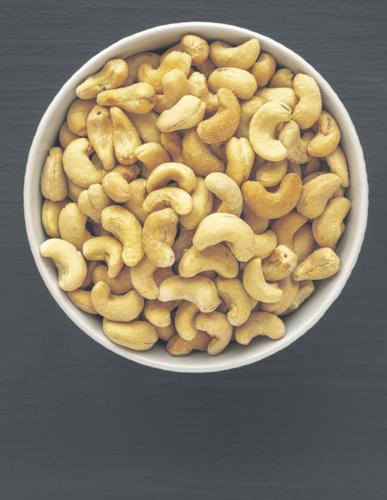


A crash course on Cashews
Facts about this delicious, healthy and versatile food
Lori Zanteson
Environmental Nutrition
Creamy, buttery and slightly sweet, cashews are a popular snack, cooking ingredient and dairy replacement in cashew butter, milk, cheese, yogurt and more.
The folklore
Native to Brazil, cashew trees began their global expansion in the 16th century when Portuguese sailors brought them to India. Cashew-craving elephants are credited for eating and dispersing the seeds across the country. Hundreds of years later, cashews are a valuable export, worth billions of dollars. Cashews are never sold in their shell, which contains a harmful oil, making them expensive to process. Fortunately, cashews are rich in protein, healthy fats and health-promoting plant compounds, making them a healthy, delicious addition to your diet.
The facts
Cashews (Annacardium occidentale) are part of the same family of trees as mangoes and pistachios. Technically a seed, each cashew grows out of the bottom of a cashew apple, a pseudo fruit that resembles an apple. The ripened apple, which ranges from yellow to red, can be eaten or juiced, but only local to where it’s grown, as it is highly perishable. A single 1-ounce serving (about 16 to 18 nuts) of cashews is plump with 10% Daily Value of protein, 10% of iron and 69% of copper.
The findings
A rich source of monounsaturated fatty acids and polyunsaturated fatty acids, cashews are associated with reduced risk of cardiovascular disease. Incorporating cashews into a typical American diet decreases total cholesterol and LDL cholesterol versus a control diet. In addition, substituting cashews for a high-carbohydrate snack may help manage total and LDL cholesterol, according to a study in the American Journal of Clinical Nutrition.
The finer points
Available year-round, cashews can be purchased raw or roasted. Whether bought in bulk or in smaller, packaged containers, note expiration dates and store in airtight containers out of direct light to protect against rancidity. For longest storage, refrigerate or freeze them. Always check package ingredients to avoid nuts coated in oils, sugar, salt or other unwanted ingredients. Cashew products, like cashew butter, flour and milk, are also available. Try cashews in trail mixes, tossed into salads and whole-grain side dishes, stir fried with vegetables or as a garnish.
Eggs: Nutrient-rich, long misunderstood
Barbara Intermill
We’ve identified Easter with eggs for a very long time, according to historians.
Ever wonder why? Through the ages, eggs were gifted to others in the spring to celebrate the season of new growth. And if you’ve ever witnessed a baby chick emerging from its shell, you can see how eggs eventually became a symbol of new life celebrated by Christians at Easter.
Nutritionally, eggs are considered one of the highest-quality protein foods on the planet. Yet for more than 40 years, they took a beating from health experts due to their high cholesterol content. That was when the prevailing evidence pointed to assumptions that diets high in cholesterol were bad for the heart.
Then in 2013, the American Heart Association and the American College of Cardiology unscrambled decades of research and concluded that “egg consumption is not associated with cardiovascular (heart) disease or (the risk of dying from heart disease) in the general population.”
Today, there is no specific advice to limit cholesterol in our diets. And eggs are now recommended as part of a healthful diet in the most current Dietary Guidelines for Americans.
Think about it. Within one little eggshell are all the nutrients needed to produce a new life. That includes numerous vitamins and minerals including vitamin B12, selenium and biotin.
And don’t forget choline — a not-so-easy nutrient to get in other foods — which is vital for maintaining the structure and function of every cell in the body. Choline is especially important during the development of the brain during pregnancy and young childhood. Even as we age, research has found that choline is essential to maintain memory and other brain functions.
Don’t assume that naturally colored brown, blue or green shells are more nutritious, however. Egg color is determined by the breed of chicken, not nutrient content, say experts.
Of course, all this good nutrition comes only when we handle raw and cooked eggs wisely. Eggs need to be refrigerated within 36 hours of being laid, says the Food and Drug Administration. And they should stay refrigerated.
That’s especially important once they are cooked, says the U.S. Department of Agriculture’s Food Safety and Inspection Service.
When you cook and dye Easter eggs, for example, don’t leave them unrefrigerated for more than two hours. And of course have your little ones wash their hands before they handle the eggs.
When kiddos hunt for real eggs, hide them off the ground and in places that are protected from dirt and other sources of bacteria, say these experts.
Once the hunt is over, rinse and put them back in the fridge. Then, within a week, get cracking with these brightly colored symbols of new life (egg salad anyone?).

Southwest Montana Health Care Directory