

Driving Discomfort
What to do if arthritis makes getting behind the wheel a painful proposition
Harvard Health Publishing
Whether you’re going to work, running errands, visiting family and friends or taking long journeys, you probably move around the community behind the wheel of a car.
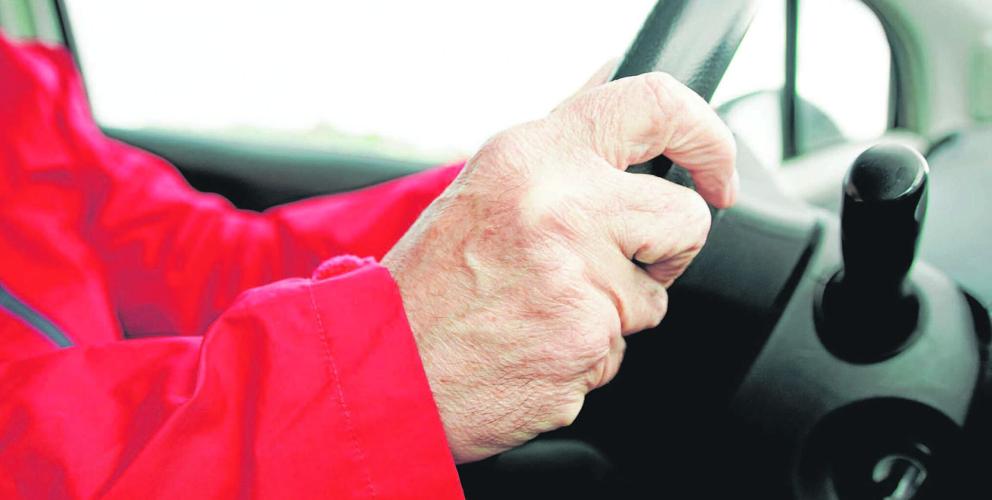
Painful joints can make the combination of arthritis and driving challenging.
You might not have to give up on pain-free driving if you follow some practical tips for staying comfortable in the driver’s seat.
Start with the basics
Depending on which joints are affected and to what degree, arthritis can cause various problems, including pain, decreased joint mobility and reduced strength. With age, many people also notice a decline in proprioception (the automatic sense of your body’s position and movement) and balance issues.
“If your goal is to continue to drive, it’s important to address functional limitations by keeping up with doctor visits, managing pain, exercising regularly and seeing a physical therapist or occupational therapist,” says Amy Donabedian, an occupational therapist and certified driving rehabilitation specialist at Harvard-affiliated Spaulding Rehabilitation.
A consistent exercise routine that strengthens muscles in the abdomen and those surrounding the joints can help ease osteoarthritis symptoms.
“Weight-bearing and balance exercises are also helpful,” Donabedian says.
Adaptive devices
When you get into the car, think about the specific issues you have and look for adaptive devices designed to make driving easier for people with arthritis. Some options:
- If you have trouble getting in and out of the car without feeling pain or losing your balance, try using a car handle assist. This handle, which is shaped like the grip of a cane, hooks onto the door latch while the car door is open to give you something to lean on for support.
- Install a seat belt extender if you have trouble reaching to pull out the belt.
- To raise the height of the seat or make it more comfortable, use a cushion.
- If your fingers are stiff or sore from arthritis in your hands, use a steering wheel cover to help with gripping. If your car doesn’t have a keyless ignition system, use a large-handled key turner to make it easier to start the engine.
- If you have trouble turning your neck, consider adding extra side-view mirrors or a panoramic rearview mirror. These are inexpensive and easy to install. Some newer vehicles include the option of extra mirrors.
- Use a rearview camera when backing up, or consider having one installed if your car doesn’t have one.
- Switch the floor mats to lightweight ones, which are easier to remove to clean, reducing the strain on your hands and shoulders.
Position yourself for driving
How you sit in your car can make a difference in your comfort level. amy donabedian, a certified driving rehabilitation specialist, offers this advice:
- Adjust the seat so that your buttocks and knees are at about the same level. “your eyes should be positioned at the level of the base of the rearview mirror, and your line of sight should be clear,” donabedian says. Make sure you can reach the steering wheel and pedals without strain.
- If the car seat doesn’t provide adequate support for your lower back, use a small lumbar pillow.
- Your head should be level and aligned with your spine. don’t hunch forward.
Get help
Making your own modifications might not solve all your problems. That’s when a certified driver rehabilitation specialist, or CDRS, can help. This professional will evaluate you and your vehicle and make personalized recommendations. He or she also will assess other abilities essential for safe driving such as vision, proprioception, reaction time and mobility.
You can get more information and find a CDRS near you from the Association for Driver Rehabilitation Specialists website, aded.net. A clinical assessment can cost about $300.
Another option is the CarFit program. This collaboration between the AARP and the American Occupational Therapy Association offers free in-person and online events. Trained experts will observe you and suggest adjustments to enhance your comfort, safety and fit in your vehicle.
Know your limits
In addition to making modifications to your vehicle, be aware of what’s happening in your body. Don’t push past your limits.
“If you’re having a day when pain is worse, that’s not the day to do five errands in the car,” Donabedian says. If you’re going on a long-distance drive, share the driving and take breaks.
Finally, don’t forget to check the potential side effects of any medications you take. Some arthritis pain relievers cause drowsiness or slower reaction times.
FDA drops proposed ban on indoor tanning for minors
Corinne Purtill
Los Angeles Times
Days before the 2024 presidential election, future Health and Human Services Secretary Robert F. Kennedy Jr. posted a statement on X promising to end the U.S. Food and Drug Administration’s “aggressive suppression” of such alternative therapies as raw milk, ivermectin, psychedelics and, somewhat perplexingly, “sunshine.”
While the post did not explain how the FDA was limiting Americans’ access to the sun, many dermatologists were dismayed when Kennedy abruptly withdrew a proposed FDA rule that would have banned minors from using devices that mimic sunlight — indoor tanning lamps.
The rule, which was withdrawn March 16, would have also required indoor tanning facility users to sign a form acknowledging the risk of cancer, early skin aging and other health effects.
Kennedy’s action comes at a time when many adherents of his Make America Healthy Again movement have adopted regular sun exposure as a core principle of wellness, with social media influencers encouraging followers to abandon sunscreen and build up their “solar callus” — or sun tolerance — instead.
The trend has frustrated many dermatologists, who warn that the damage from frequent sunburns and tans accumulates over a lifetime, and those acquired early in life appear to play a disproportionate role in later risk of skin cancer. The Skin Cancer Foundation notes also that you cannot build up a tolerance to sun exposure and “there is no such thing as a ‘solar callus.’”
Dermatologists have long cautioned that indoor tanning lamps are no less dangerous, since they expose users to ultraviolet light at concentrations far above natural sunlight. Like sunlight, the lamps emit two different types of ultraviolet wavelengths: UVA, which are longer and penetrate more deeply into the skin, and UVB, which are shorter and more easily burn the outer layers.
Both light sources darken skin through the same biological process: UV rays change the structure and chemical profile of DNA in the skin, which then produces more melanin in order to prevent further damage.
A tanning bed session exposes users to UVB rays akin to those at noon at the equator — an intense experience, but at least one with a terrestrial equivalent, said Hunter Shain, an associate professor of dermatology at UC San Francisco. The UVA radiation in a tanning bed is roughly 15 times that found anywhere on the surface of the planet.
“They’re really blasting you with these super physiological doses of UV radiation that you couldn’t even find in a natural environment,” he said.
The World Health Organization counts UV-emitting tanning beds as a Group 1 carcinogen, alongside other known human carcinogens like cigarettes and asbestos. One study Shain co-authored found that tanning beds accelerate DNA mutations in parts of the body not typically exposed to the sun, leading to a nearly threefold increase in indoor tanners’ lifetime melanoma risk. Rates of melanoma diagnoses have increased by 46% in the last decade.
The tanning lamp rule, which was first proposed in 2015, focused on age as a specific risk factor. Tanning bed usage before the age of 35 is associated with a 75% increase in the risk of melanoma, the most serious and frequently fatal form of skin cancer.
The rule drew more than 9,000 public comments from both physicians and cancer research organizations supporting its implementation and from tanning bed industry representatives and business owners opposed.
Kennedy, who was photographed leaving a Washington tanning salon last year, was ultimately unconvinced of the need to ban minors from such establishments.
“In light of the scientific and technical concerns raised in the comments on the Proposed Rule, concerns regarding possible unintended consequences of certain proposals in the Proposed Rule, and potential alternatives proposed in comments received on the Proposed Rule, FDA is withdrawing the Proposed Rule in order to reconsider the best means for addressing the issues,” Kennedy wrote in the withdrawal letter.
Health and Human Services did not respond to questions about what scientific concerns and unintended consequences Kennedy was referring to.
Nineteen states and the District of Columbia have already banned people under 18 from indoor tanning salons. Roughly two dozen more have regulations regarding minors and indoor tanning, such as requiring parental permission or barring only younger children.
The collapse of the proposed federal ban has left many dermatologists disappointed.

Southwest Montana Health Care Directory