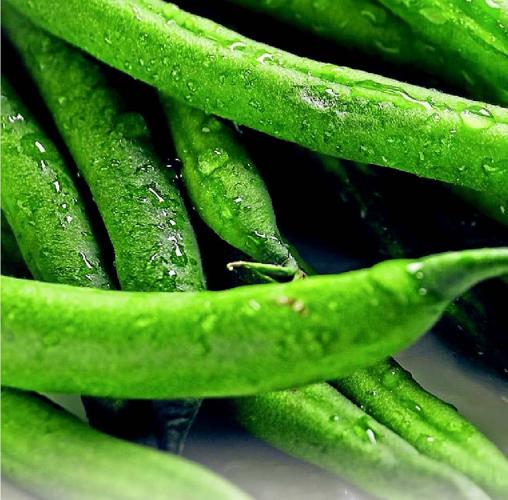


Go for the Green Beans
Perks of the popular podded produce
Lori Zanteson
Environmental Nutrition
The folklore
Native to Peru, green beans traveled via migrating Native American tribes through South and Central America and on to Europe by way of Spanish explorers. Whether you know them as haricots verts (green beans in French), string beans or snap beans, green beans deliver a delicious and nutritious dose of vitamins, minerals and health-promoting plant compounds.
The facts
Green beans are identical by scientific name (Phaseolus vulgaris) to other shell beans, or “common beans” such as black beans, pintos and kidney beans. Green beans are unique in that they are picked very young, when the inner beans are just forming in the pod, and they are typically eaten fresh with the pod rather than in dried form.
Rich in a diverse supply of antioxidant nutrients including flavonoids and carotenoids, green beans also provide an excellent supply of the antioxidant vitamins C and A. In fact, one cup of raw green beans packs 25% Daily Value of vitamin C, 15% of vitamin A and 18% of bone-healthy vitamin K — all in just 31 calories.
The findings
Rich in bioactive plant compounds, such as phenolic acids, flavonoids and fatty acids, beans, including green beans, may help protect against several health problems like atherosclerosis and metabolic syndrome. They are also linked to reductions in cholesterol and blood glucose, which suggests they may help prevent cardiovascular disease.
According to a study in the journal Nutrients, green beans are an important component of plant-based eating patterns to support health, such as helping to maintain healthy weight and a healthy gut microbiome and improving low-grade inflammation. They may potentially play a role in immune-related disease risk management.
The finer points
Fresh green beans are available year-round, as are frozen and canned. Choose vibrant green beans that are smooth and firm to the touch. Check clear-packaged green beans for fresh appearance as well as the “Use By” date. Refrigerate unwashed green beans in a plastic bag for up to seven days.
Enjoy fresh green beans raw in salads, in slaws and as a crunchy snack or appetizer dipped in an herbed yogurt dip. Cooked green beans retain best color and flavor by steaming, quick boiling or sauteing, though they are also delicious roasted, air-fried, baked in casseroles and egg dishes, and in soups and stews.
Try a pop quiz over probiotics
Barbara Intermill
Tribune News Service
Today, class, we’re going to take a pop quiz on probiotics — a topic that may or may not be familiar. Take your best guess.
1. Probiotics are:
A. Professional robots.
B. Friendly bugs in your body that do you good.
C. Beneficial bacteria that mostly live in your lower intestines.
D. B and C.
2. The right balance of good bacteria in our bodies may:
A. Help us jump tall buildings.
B. Fight off certain diseases.
C. Make us less susceptible to certain allergies.
D. B and C.
3. In order to be effective, probiotics must be:
A. Living.
B. Dead.
C. Taken at the right dose.
D. A and C.
4. What’s the best way to get probiotics?
A. In food.
B. In supplements.
C. Both food and supplements are effective.
D. Via sunlight.
5. Which of these foods are not good sources of probiotics?
A. Kefir, yogurt, cultured buttermilk.
B. Pecorino, cheddar and mozzarella cheese.
C. Sauerkraut, vinegar and sourdough bread.
D. None of the above; all contain probiotics.
6. Probiotics help keep you well because they:
A. Fight off bad bacteria.
B. Make you get out of bed to exercise.
C. Help your body absorb nutrients.
D. A and C.
7. Since probiotics are living organisms, their growth is stimulated by:
A. Ham and eggs.
B. Prebiotics.
C. This is all very confusing.
D. None of the above.
8. Prebiotics are:
A. Food that feeds probiotics.
B. Found in foods high in dietary fiber.
C. One reason why we need fruits and vegetables.
D. All of these are correct.
9. Probiotics found to be useful for certain types of allergies are:
A. Lactobaccilus.
B. Bifobacterium.
C. A and B.
D. Lactosneezy.
10. These probiotics have been found to help prevent diarrhea associated with antibiotic therapy:
A. Lactobacillus GG.
B. Saccharomyces boulardiic.
C. A and B.
D. Is this test almost over?
11. Which of these statements is true?
A. Probiotics are safe for most healthy people.
B. Probiotics may not be safe for severely ill people.
C. It’s important to talk to your health care provider before taking probiotics.
D. All of these are correct.
12. True or false: We still have a lot to learn about probiotics.
Answers
1. D
2. D
3. D
4. C
5. D
6. D
7. B
8. D
9. C
10. C
11. D
12. Very true

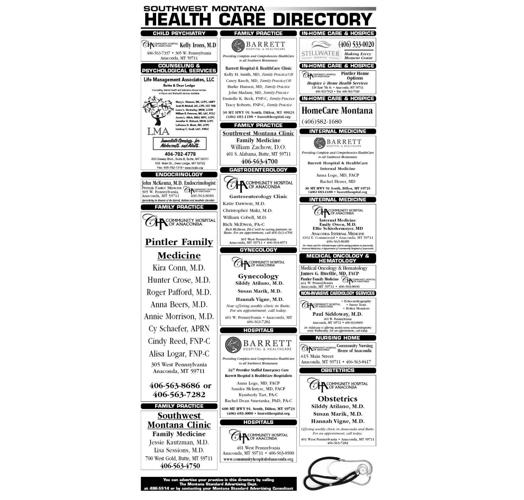
Southwest Montana Health Care Directory