
US loses measles-free status
YASMEEN ABUTALEB, JULIE STEENHUYSEN AND JENNIFER RIGBY
Reuters
WASHINGTON — Public health experts say the U.S. must drive vaccinations and disease surveillance to regain the hard-won measles-free status it held for 26 years, which a Trump administration official said Monday was revoked.
The Pan American Health Organization told the Trump administration in a letter Friday that the United States had lost the status, the official said. PAHO is expected to make the formal announcement Tuesday.
The Wall Street Journal first reported the letter Friday.
The decision by the Americas branch of the World Health Organization comes as the U.S. battles its highest number of measles cases in more than three decades.
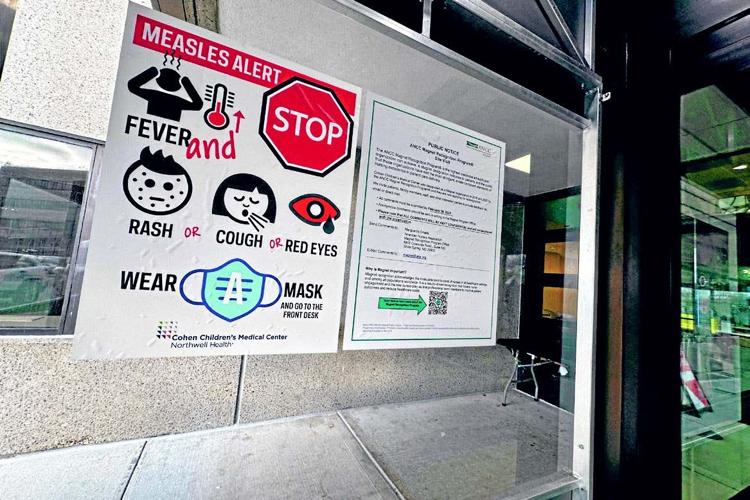
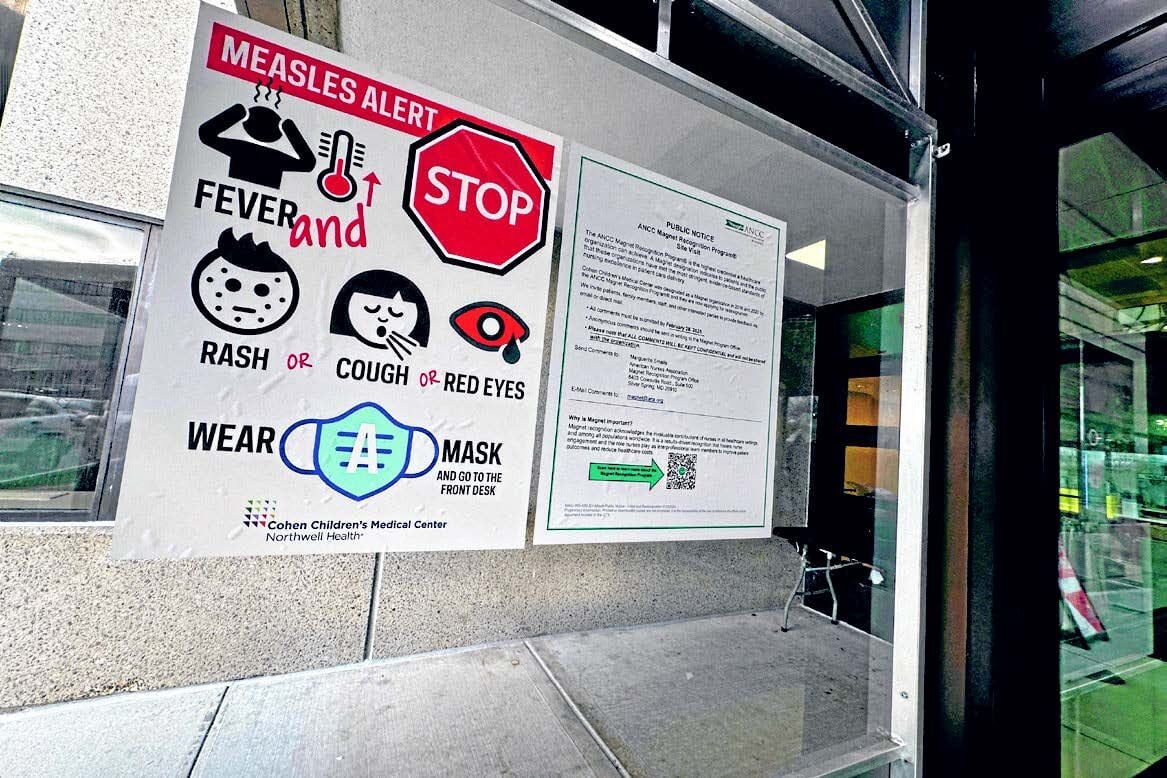
About 7,700 people in the U.S. have been infected with measles and 13 died since 2025.
That period coincides with falling immunization rates and rising vaccine hesitancy under Health Secretary Robert F. Kennedy Jr., who for years has spread doubts — without scientific evidence — about the safety of measles vaccines.
Regaining measles elimination status requires demonstrating that measles transmission has stopped and is not sustained for 12 months, and that the country has a high-quality, functioning surveillance system.
Measles outbreaks continue to appear in places like Pennsylvania, New York and Wisconsin, with no clear evidence that transmission ended nationally, said Jennifer Nuzzo, director of the Pandemic Center at Brown University. She said it is unlikely that all measles cases were being counted.
In its letter, PAHO urged the U.S. to intensify its vaccination efforts to halt transmission of the highly contagious virus, said the official, who spoke on condition of anonymity to discuss a decision that was not yet public.
“What we need to do is terminate the current transmission. To do that, we need to enhance immunization uptake in virtually all communities,” said Walter Orenstein, a professor emeritus at Emory University.
Orenstein was a member of the U.S. independent advisory panel that presented the U.S. Centers for Disease Control and Prevention’s measles status report, along with its assessment that the U.S. likely lost its measles elimination status, to PAHO last week.
Public trust in vaccination fell during and after the COVID-19 pandemic, and messaging from Kennedy and the White House about the risks of the measles, mumps and rubella, or MMR, vaccine exacerbated those concerns, several experts said.
While the CDC has said it supports vaccinations for measles, the government put millions of dollars into investigating vaccine safety and publicly pushed several states to loosen school vaccine mandates.
“Regaining that trust takes time, and requires a consistent effort from the officials that are working in public health,” said Josh Michaud, a public health analyst with KFF, a health policy research group.
CDC Director Erica Schwartz, who has been in the job for three months, told Reuters last week that if the U.S. loses elimination status, the agency would not change its response.
Two shots of the MMR vaccine are 97% effective at stopping the spread of measles. The WHO recommends that 95% of people receive two shots of the vaccine to achieve herd immunity, which can protect those unable to be vaccinated and prevent spread. The disease can cause blindness, deafness, brain damage or death.
In August, the CDC reported that vaccination coverage among children in kindergarten in the 2025-26 school year was 92.4% but it was much lower in certain pockets of the U.S. During the South Carolina measles outbreak this year, some individual schools in Spartanburg County reported immunization rates as low as 20%.
Dr. Ben Kasstan-Dabush, assistant professor of global health & development at the London School of Hygiene & Tropical Medicine, said the U.S. needs to increase vaccinations across all groups.
As part of its evaluation, PAHO reviewed epidemiological and laboratory evidence the CDC submitted to determine whether the same strain of measles had been circulating in the U.S. for 12 months or longer. The senior administration official said the outbreak in Utah, which began in June 2025, was key to PAHO’s determination.
Other critical tools needed to improve the U.S. response include improving surveillance networks to be able to identify and test for the virus and beefing up epidemiological capacity to follow up on cases and interrupt chains of transmission.
Orenstein said it is critical that the U.S. resume its support for global immunization efforts, which were disrupted when the U.S. dropped out of the WHO. The U.S. remains a member of PAHO.
He said every U.S. measles case in the past two years originated as an imported virus, often brought in by Americans traveling abroad who then sparked U.S. outbreaks.
Canada, Spain and the United Kingdom recently lost measles-elimination status after review by WHO experts.
As of Thursday, 5,182 confirmed cases of measles were reported this year to the CDC, surpassing last year’s total of 2,289, making it one of the country’s worst measles resurgences in decades.
“It is a fully preventable disease. It is unconscionable that we have this amount of measles,” said Noel Brewer, a public health professor at the University of North Carolina.
Brewer, who chairs an independent advisory panel on measles, presented the CDC’s measles status report, which remains confidential, to PAHO last week.
William Moss, an epidemiology professor at the Johns Hopkins Bloomberg School of Public Health, said loss of measles elimination was a hit to the United States’ reputation as a public health powerhouse and may discourage other countries.
Are peptides legal now? What HHS policy really means
AVIVA PATZ
For Hone Health
Six popular peptides may soon be easier to get through a doctor and a licensed pharmacy. In late October, the Department of Health and Human Services (HHS), which oversees the FDA, announced an interim policy saying it won’t take certain enforcement actions against physicians and pharmacies preparing BPC-157, TB-500, KPV, MOTS-c, epitalon, and Semax — provided they meet specific conditions.
The policy doesn’t legalize these peptides or grant FDA approval. It doesn’t mean they work the way an influencer promised on TikTok or give every online peptide seller a green light. It does change the government’s approach to enforcing existing rules while the FDA considers their longer-term status.
Hone Health, a physician-led longevity clinic, breaks down what changed, what didn’t, and what it means if you’re curious about peptides.
Key Takeaways:
Six peptides that purport to combat aging, build muscle, and more just got easier to access.The FDA hasn’t approved them; it just won’t take enforcement action against pharmacies preparing these peptides if they follow a set of strict rules. The agency says the interim policy will improve safety and suppress gray-market production.
Why Did HHS Issue This Policy?
Americans are already using peptides, short chains of amino acids that act as signaling molecules in the body. Some peptide medications, including insulin and certain GLP-1 drugs, are FDA-approved; this policy covers six that aren’t.
Among 476 current or past users who answered a product-use question in Hone Health’s May 2026 survey, 18% reported using BPC-157, 16% TB-500, and 18% the combination dubbed the “Wolverine Stack.” People seek out these peptides for tissue repair and injury recovery, though they aren’t FDA-approved for those uses.
“People are not going to stop using peptides. That genie is out of the bottle,” says Elizabeth Yurth, M.D., a Hone-affiliated physician and co-founder of the Boulder Longevity Institute and International Peptide Society. Yurth has prescribed a range of peptides for nearly 10 years and testified at July’s FDA advisory meeting in support of compounding access to BPC-157 and TB-500. “The real risk with peptides has never been the molecule. It’s not knowing what’s actually in the vial. This policy finally gives patients a way to get the real thing, tested for identity and purity, with a physician watching how they respond.”
The risk Yurth is referring to comes from the fact that many products sold online are labeled “for research use only,” meaning they aren’t intended for human treatment. Buyers have no reliable way to verify their ingredients, concentration, or manufacturing standards.
HHS aims to steer people away from that uncertainty and toward physicians and licensed pharmacies that follow sourcing and testing requirements. Medical oversight matters to respondents: In a separate Hone survey question, nearly 90% of 625 respondents said involvement from a licensed medical provider would significantly or somewhat increase their trust in and willingness to try peptide therapy. Respondent counts vary because different questions went to different groups.
There is disagreement, however, about whether the evidence supports expanded access. In July, the FDA’s outside advisory panel recommended allowing the six peptides in compounding. The FDA’s drug-review center, CDER, recommended against listing all six, citing insufficient evidence of safety and effectiveness.
Which Peptides Are Included?
The HHS policy covers six peptides in specific forms: BPC-157 (injection, oral, or topical), TB-500 (injection), MOTS-c (injection), epitalon (injection in intermittent courses), KPV (oral or topical), and Semax (nasal).
Each product must contain only one active ingredient. A blended BPC-157/ TB-500 vial wouldn’t qualify. That doesn’t take the Wolverine Stack off the table — it just means a physician will have to prescribe them separately, subject to the policy’s other conditions and state requirements.
How Can You Get These Peptides?
Compounding pharmacies have rules about which ingredients they can use to prepare customized medications. These six don’t currently qualify, but HHS says it won’t take certain enforcement actions against providers preparing them under its conditions.
You’ll need a prescription from a physician. The policy covers traditional patient-specific compounding under Section 503A of federal law. It does not cover Section 503B outsourcing facilities, which can supply compounded medications without prescriptions for individually identified patients.
It also doesn’t bind state regulators. State pharmacy boards can still restrict access, so availability may differ depending on where you live.
Some longevity, wellness, and sports medicine practices already offer peptide treatment.
What Makes These Peptides Different From Ones Sold Online?
Unlike the gray market — with its mystery vials and DIY dosing — this pathway comes with sourcing rules, quality checks, and medical oversight.
These requirements don’t amount to FDA approval. The agency doesn’t review compounded medications for safety, effectiveness, or quality before they reach patients.
What Should You Ask Your Physician About Peptides?
Sourcing and testing requirements can’t establish whether a peptide will address your symptoms or reveal every possible side effect. The amount and quality of human research vary by peptide. Ask your physician:
On what basis do you recommend this peptide for my specific concern? What are the known risks, and could my health history or medications make it unsuitable? Are there established treatments with stronger evidence? How will we know it’s helping, and when would we stop if it isn’t? What side effects require a call or urgent care?
What’s Next for Peptides?
Public comments are scheduled to close on Nov. 13, 2026. Feedback could inform changes to the policy and the FDA’s longer-term decisions.
The FDA may propose adding some or all six peptides to its list of ingredients that pharmacies can use in customized medications. That requires a separate public review process; no deadline has been announced.

Southwest Montana Health Care Directory