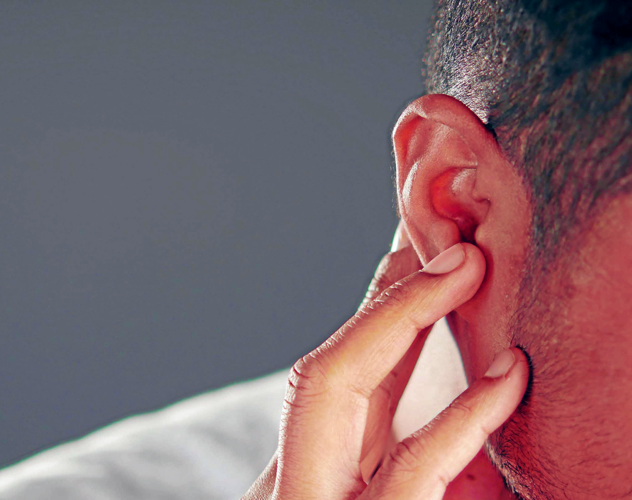


Sonic Doom
A closer look at hyperacusis, a condition where hearing hurts
Heidi Godman
Harvard Health Publishing
Many people become hard of hearing as they get older. But another common condition is less well recognized, and is almost the opposite problem: hypersensitivity to sounds such as someone’s voice or the shrill clang of a fork accidentally dropped on a plate.
Sounds not only can seem louder than normal, they also can cause pain and upset you. The condition is called hyperacusis (pronounced “hyper-a-COO-sis”).
“It occurs in up to 15% of the population, and it’s more common after age 50 in people with or without hearing loss,” says Meaghan Reed, director of clinical audiology at Harvard-affiliated Massachusetts Eye and Ear.
What is hyperacusis?
Hyperacusis describes sensitivity to some or all sounds, no matter the volume. The particular type of bothersome sound varies per person. So does the effect on the body, which is classified into several categories. For example, people with hyperacusis can experience:
- Sounds that are uncomfortably loud (loudness hyperacusis).
- Sounds that cause pain in the ear, head or another part of the body (pain hyperacusis).
- Sounds that trigger negative emotional responses, such as fear (annoyance hyperacusis).
- Sounds that set off dizziness or nausea (vestibular hyperacusis).
What causes it?
Experts don’t know exactly why sound sometimes leads to physical or emotional responses.
“Some research suggests that it stems from tiny muscles in the middle ear that have become irritated or overactive,” Reed says.
It might also be due to overactivity of the nerve fibers that carry hearing signals from the ears to the brain. This is similar to the production of phantom ringing or whooshing in the ears — tinnitus — that is audible only to you. In fact, hyperacusis often occurs with tinnitus.
When should I call the doctor?
Seek medical help for suspected hyperacusis when your reactions to certain sounds interfere with your daily life. Reed recommends starting with your primary care doctor to rule out potential underlying conditions, and then seeing an audiologist or an ear, nose and throat specialist.
There’s good reason to take action.
“The problem with hyperacusis extends beyond discomfort,” Reed says. “The condition sometimes keeps people from being able to do certain tasks or engage socially. Social isolation has many serious health risks.”
How is it treated?
We have few effective ways to cope with hyperacusis.
“Medication such as painkillers or anti-anxiety medications might help, but we don’t have a lot of strong research showing that it works, especially for painful hyperacusis,” Reed says.
But you might have success with some or all of the following strategies:
- Avoid triggers: Anticipate ways to dodge sounds that heighten your hyperacusis symptoms. For example, cover a glass tabletop with a tablecloth (to diminish the ping of silverware accidentally falling on it) or ask friends and family members to lower their volume level when they speak.
- Wear hearing protection: If you know you’ll be exposed to uncomfortably loud sounds, such as kitchen clean-up, you might wear earplugs or sound “earmuff s,” which dampen all noise around you. “But don’t wear ear protection all the time; that might worsen your sound sensitivity and lead to isolation and loneliness,” Reed warns.
- Take your mind off of it: “Surround yourself with sound you find pleasant, such as rainfall or a fan at a volume you find comfortable,” Reed advises. Play the sounds on an audio device, use a sound machine or listen to pleasant sounds while wearing earbuds or headphones, but limit how long you wear them.
- Consider sound therapy: One type of sound therapy introduces you to loud sounds gradually, potentially dulling your reactions to them. Seek this therapy with an audiologist, particularly one who also works with people who have tinnitus.
- Try cognitive behavioral therapy: A psychologist or licensed therapist can help you redirect negative thoughts about hyperacusis to less stressful thoughts and emotions.
What about surgery?
Surgeries for hyperacusis are reserved for extreme cases. There’s little evidence that they ease the condition.
If you’re interested, consult with an otolaryngologist who specializes in ear problems — an otologist or a neurotologist — who has performed surgery to relieve hyperacusis before. You’re most likely to find an expert who fits that description at an academic medical center.
Cancer patient denied treatment until too late
Lauren Sausser
KFF Health News
For nearly three years, Eric Tennant endured chemotherapy infusions, rounds of radiation, biopsies and hospitalizations that left him weak and depleted.
“It’s good to be home,” he said after one hospital stay in early June, “yet I’m tired and ready to get on with things.”
In 2023, Tennant, of Bridgeport, West Virginia, was diagnosed with cholangiocarcinoma, a rare cancer of the bile ducts that had spread throughout his body.
None of the initial treatments prescribed by his doctors had eradicated the cancer. But a glimmer of hope came in early 2025, when Tennant was recommended for histotripsy, a relatively new procedure that would use ultrasound waves to target, and potentially destroy, the largest tumor in his body — in his liver.
“My dad was a little nervous because it was something new, but it definitely gave us some hope that he would be around a little bit longer,” said Tennant’s daughter, Amiya.
There was just one hitch: His insurer wouldn’t pay for it.
Tennant, 58, died of cancer on Sept. 17. His story illustrates how a bureaucratic process called prior authorization can devastate patients and their families.
It’s infeasible to count the people harmed by this overwhelmingly unpopular practice, which, by delaying or denying care, helps drive health insurers’ profits. No government agency or private group tracks such data.
That said, KFF Health News has heard from hundreds of patients in recent years who claim that they or someone in their family has been harmed by prior authorization. More than 1 in 4 physicians surveyed by the American Medical Association last December said that prior authorization had led to a serious adverse event for a patient in their care. And 8% responded that prior authorization led to a disability, birth defect or death.
In June, the Trump administration announced a pledge, signed by dozens of private insurers, to streamline prior authorization, which often requires patients or their medical teams to ask insurers for permission before proceeding with many types of care. It remains unclear when patients can expect to see improvement.
The commitments “depend on the full cooperation of the private insurance sector” and will “take time to achieve their full effect,” said Andrew Nixon, a spokesperson for the Department of Health and Human Services. But the pledge exists, he said, “to prevent tragic deaths like Eric’s from occurring at the hands of an inefficient system.”
Chris Bond, a spokesperson for AHIP, a health insurance industry trade group, said he could not speak to any specific insurer’s prior authorization policies. Broadly, though, he said prior authorization “acts as a guardrail” to make sure medicines and treatments are not used inappropriately.
At the same time, he said, insurers recognize that patients can be frustrated when their doctor-recommended care is denied. That’s why “there is a dedicated eff ort across the industry to make the process more straightforward, faster, and simpler for patients and providers,” Bond said.
In the meantime, the process continues to take its toll on people like Eric Tennant, whose grave diagnoses often require expensive health care services.

Southwest Montana Health Care Directory