


Pricey Pills?
Doctor offers tips for saving money on your medications
MAUREEN SALAMON
Harvard Health Publishing
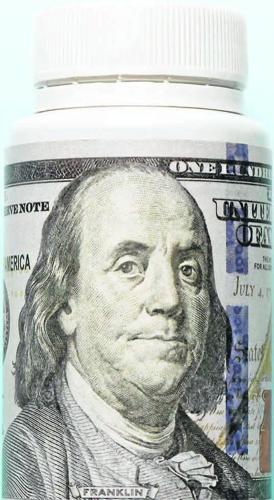
If you can practically hear your wallet cry out in pain every time you pick up medication at the pharmacy, there’s good reason. The sticker shock of prescription drugs is increasingly hard to ignore.
Prescription drug spending among Americans has jumped markedly over the past three decades, driven largely by high prices for brand-name medications, according to an article co-authored by Harvard cardiologist and health economist Dr. Dhruv Kazi. The research was published June 2 in Circulation.
Why medication costs vary
Drug prices are all over the map, with some generic drugs costing a few dollars a month and others — typically those treating cancer or rare diseases — priced at hundreds of thousands of dollars or more.
Drug makers say it’s expensive to develop new medications and run the necessary clinical trials to prove their safety and effectiveness.
But while 84% of Americans have insurance that covers prescription drugs, out-of-pocket costs for some medications can still run hundreds or even thousands of dollars each month.
“It’s a golden age in medical discovery. We’re starting to address diseases that even five or seven years ago didn’t feel manageable,” says Kazi, the associate director and section head for health economics at the Richard A. and Susan F. Smith Center for Outcomes Research at Harvard-affiliated Beth Israel Deaconess Medical Center. “At the same time, health care in general is becoming more expensive and insurance coverage is becoming skimpier.”
6 ways to lower medication costs
Dr. Kazi offers the following strategies to minimize how much you spend on prescription and over-the-counter drugs.
1 Ask your doctor key questions
These questions include: Do I still need every medication I take? Is it safe to reduce my dose? Can I substitute a lower-cost or generic drug? “Sometimes, there might not be a generic but instead, two brands in the same drug class, and one could be substantially cheaper on your insurance,” Kazi says.
2 Explore drug discount programs
Doctors and pharmacists can sometimes provide discount cards that can slash the price of your prescription — just ask. Additionally, large drug makers often sponsor medication assistance programs that either provide free medications to certain patients or offer coupons for discounts.
3 Buy in bulk
Purchasing a 90-day supply of medication can sometimes be cheaper than buying three separate 30-day supplies. This option is often part of mail-order programs run by insurers. “Getting your prescription drugs by mail can also be more convenient,” Kazi says.
4 Compare pharmacy prices
The same medication can cost dramatically different amounts at different pharmacies. Calling several pharmacies in your area for price checks before dropping off your prescription can lead to a better deal. But “it’s generally easier to get this information from your insurer than a pharmacy,” Kazi says.
5 Check out direct-to-consumer drug platforms
In just the past two years, more than a dozen American drug manufacturers launched direct-to-consumer platforms, selling brand-name prescription drugs directly to patients. By doing so, they can offer certain drugs at lower prices since they bypass costly “middlemen” such as insurers and pharmacy benefit managers.
6 Compare store brands
Many over-the-counter remedies — including acetaminophen (Tylenol) and ibuprofen (Advil) — are sold in store-brand generic versions that are far cheaper than the name-brand option. “In the United States, our generics’ quality control is excellent,” Kazi says. “You’re buying very similar drugs at significantly lower prices.”
What not to do
Some people walk away from the pharmacy counter without their prescription drugs once they hear how much they’ll cost. Others may — without checking with their doctor — take medications less often than prescribed or reduce their dose.
“In this economy, many people are trying to figure out whether they should fill their diabetes prescription this month or skip it to pay the utility bill,” Kazi says.
But these are dangerous tactics. When people stop taking lifesaving medications, they may develop serious health problems — including uncontrolled diabetes, heart attack or stroke — that can lead to hospitalization or death. Never stop taking a prescription drug without consulting a doctor.
“The most catastrophic mistake you can make is to decide you can’t afford your medication and that your only option is to stop taking it,” Kazi says.
Infant bleeding rises as parents refuse vitamin K doses
JULIE STEENHUYSEN
Reuters
CHICAGO — Rates of life-threatening bleeding in U.S. infants have risen sharply since 2017 as parents increasingly refuse protective newborn doses of vitamin K, a trend that coincides with a growing wave of mistrust toward vaccines and other newborn interventions, two studies published on Thursday found.
The studies are the first to show that bleeding rates in U.S. infants have increased along with rising refusals of vitamin K shots.
Babies are not born with enough vitamin K, an essential nutrient that helps blood clot, and vitamin K injections at birth have been standard for over 60 years. As a result, the U.S. Centers for Disease Control and Prevention does not track rates of vitamin K refusals or bleeding.
Vitamin K refusals have been rising steadily since the COVID19 pandemic, but have accelerated under Health Secretary Robert F. Kennedy Jr., who spent decades sowing mistrust about vaccines before taking the nation’s top health post. He has since dropped childhood recommendations for six vaccines. Changes to the childhood vaccination schedule are on hold over a legal challenge. Health experts say the mixed messages have raised doubts among many parents about routine newborn treatments, including vitamin K.
A U.S. Department of Health and Human Services spokesperson said the CDC still recommends vitamin K shots for newborns but declined to say whether the agency would begin tracking rates of vitamin K refusals or bleeding events.
A study published in JAMA last December by Dr. Kristan Scott and colleagues at the Children’s Hospital of Philadelphia showed that more than 5% of U.S. babies did not receive a vitamin K shot in 2024, a 77% increase since 2017.
The latest data, published in JAMA and JAMA Pediatrics, show rates of vitamin K refusals have continued to climb, and begin to connect the dots between rising refusals of the essential vitamin and increased bleeding episodes.
While these studies do not prove causation, the fact that the rates of bleeding have increased so dramatically at the same time vitamin K refusals and deficiencies have risen is significant, said Dr. Steven Woolf, an epidemiologist at Virginia Commonwealth University, whose study appeared in JAMA Pediatrics.
Providing vitamin K shots at birth has been the standard of care since 1961. “Now we’re stepping away from that and we’re seeing the consequences,” he said.
Woolf and colleagues studied medical records from 11 million infants 6 months and younger between 2017 and 2025. During that time, the percentage of newborns who received a vitamin K shot fell from 97.7% to 95%, while the rate of vitamin K deficiency bleeding nearly quadrupled and appeared to be accelerating.
Of more than 11 million births, there were a total of 5,217 bleeding events over that multi-year period.
“The rate in 2025 was approximately double what it was in 2024,” Woolf said.
The team noted that the peak in 2025 coincides with eroding trust in public health following the COVID pandemic, rising vaccine hesitancy and growing parental skepticism around newborn interventions.
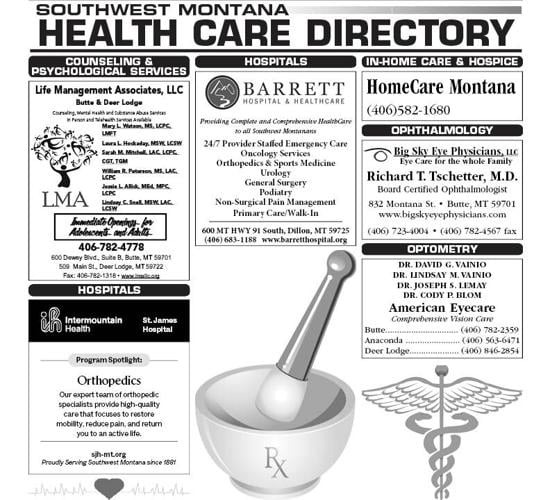
Southwest Montana Health Care Directory