

Survivor's Journey
Family history led woman to early screening. At 24, she found a lump
DAVID OLIVER
USA Today
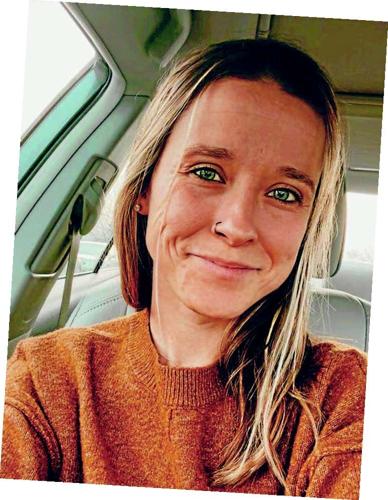
Cancer snuck into Chance Osborne’s family history. Breast cancer, ovarian cancer. But was it hiding in her genes, too?
Her mom died of ovarian cancer in 2011, when Osborne was 14 years old. All of her mother’s sisters had some form of cancer as well.
When she turned 18, a doctor recommended she seek genetic counseling. Osborne had the BRCA1 gene, meaning she had a higher risk of developing breast and ovarian cancers. Her doctor recommended imaging right away.
“I was reluctant,” Osborne says. “So I waited a couple years, and then started imaging when I was about 20, doing a breast MRI every six months, and then either a mammogram or an ultrasound every six months from that point forward.”
Despite these precautions, the unthinkable still happened. Two weeks after a squeaky-clean breast MRI in early 2021, tanning on the beach in Florida, she felt something. Something weird.
“I thought I was maybe laying on like a seashell or something,” Osborne, now 30, recalls, “so I went to go lift up my beach towel, and there was nothing there. And I will never forget that feeling in my stomach of like, ‘oh no.’”
Osborne, then 24, discovered a lump. She ignored it for a few weeks, only to later learn it was triple-negative breast cancer that grows extremely fast.
“Even from the time I identified the lump myself to when I actually went into the doctor, it had almost doubled in size,” Osborne adds, “and that was in just a twoweek frame.”
The state of breast cancer
More than 300,000 women will receive breast cancer diagnoses in a given year, and it is the most common cancer for U.S. women apart from skin cancer, according to the American Cancer Society. More than 40,000 people will die from breast cancer this year. Despite its pervasiveness, many remain uneducated about the disease.
“One of the most common misconceptions is people believe that in order to get breast cancer, you have to have a family history,” says Dr. Ruemu Birhiray, oncologist and hematologist at Hematology Oncology of Indiana/American Oncology Network. Most breast cancers are curable if found early, and “screening tools like mammograms are very useful in identifying early stage breast cancer.”
“Are they perfect? No, they are not,” he adds, “but an annual mammogram would be very good.”
He also recommends patients do selfbreast exams once a month — do it on the 23rd every month if your birthday is on the 23rd, for example — and learn about risk factors that may make you a candidate for early screening.
Even if you do everything right, breast cancer can still develop. Osborne’s treatment plan included chemotherapy, followed by surgery, radiation, a double mastectomy with failed reconstruction and a total hysterectomy.
“It was preventative,” she says of the hysterectomy, “given my mom’s ovarian cancer diagnosis and the fact that I had BRCA1 and the fact that I had cancer so young.”
Life after treatment
Social media was her best friend and worst enemy during treatment.
“People who are not doing well want to talk about it online, and they want to get support online,” she says. “On the other side of that, people who are doing really well, they’re not talking about it online because they’re living their lives. They’re doing the things that they weren’t sure that they were going to be able to do.”
Online discourse, though, led her to discover Signatera, a circulating tumor DNA test that aims to help find cancer relapses earlier. Osborne now works for its parent company, Natera.
Osborne pushed her doctor for testing to give her peace of mind, and has now had 15 negative tests since starting them several years ago.
“I’ve been doing this for almost three years now, and I’m still an anxious wreck every single time I’m waiting for my results,” Osborne says. “I don’t think that’s ever going to go away, but the anxiety that comes from not knowing is much more severe to me than knowing. Even if it came back positive, I would at least want to know.”
She gets tested every three months, and will switch to twice a year once she hits seven years cancer-free, per guidance from her oncologist.
Genetic testing ‘empowering’
Years after her mother’s death, grief continues to punch Osborne in the gut. This past July marked a grim milestone: her mother being dead longer than the time Osborne spent with her alive.
“The older I get and the farther out I get in my own survivorship, the harder it gets to grieve her,” she says, noting that her own cancer journey peeled back new layers of sadness.
“Typical grief, without my own cancer journey, would honestly feel I think a little bit easier versus having like this survivorship guilt and also grieving the loss of my mom,” she adds. “So it’s definitely been a harder year.”
Now, she advocates for people to get genetic testing to learn their risks for developing cancer.
“Finding out this information about your DNA is not intended to be scary,” she says. “It’s intended to be empowering and enable you to make decisions to save your own life.” Plus, “just because you don’t have family history, and just because you’re young, doesn’t mean it’s not going to happen or that it can’t happen to you.”
Hamilton bingo night raises funds for breast cancer
NICOLE GIRTEN
nicole.girten@ravallirepublic.com
Judy Rothie has been doing mammograms in Hamilton at Bitterroot Health since 2007, and this year marks the seventh bingo fundraiser she’s organized to help raise funds for breast cancer patients who may not have insurance to cover medical costs.
On Thursday, the annual event raised $3,000, with the Eagles Lodge in Hamilton packed with rows of tables of attendees wearing pink and filling out bingo cards to support the cause.
All proceeds from the event go toward the Aid for Mammography Fund, which helps fund treatment for low-income breast cancer patients in the Bitterroot.
Rothie teared up thinking back to when she worked in X-ray imaging and about her first boss, who was diagnosed with breast cancer and died a young mother to two small children, she said.
“That kind of got me on my journey,” she said.
Rothie’s mother was later diagnosed with breast cancer at age 79, the year after she didn’t get a mammogram. However, Rothie describes it as a “success story” as doctors found the cancer early, and she recovered after a routine surgery.
“We’re celebrating her 88th birthday tomorrow,” Rothie said.
Local businesses donated upward of 50 gift packages and prizes to be raffled off during the event, which included a $250 granite slab in the shape of the state of Montana from Alpine Granite and a $492 gift card from Vern’s Nursery.
Bingo winnings are divided up 50/50, with the Aid for Mammography Fund receiving one half and the winner the other. Rothie said some winners opt to donate their winnings to the cause as well.
Volunteers also sold pink T-shirts and socks, with the proceeds going toward the fund.
Rothie said the “gratitude is twofold” for her. For one thing, she said, the event generates a sense of camaraderie for current cancer patients and survivors. But it also does something else, she noted: raises awareness that women need to get regular mammograms after a certain age.
“When I go to work on Monday, I have women come in that make their appointments that say, ‘I would have not known about this if we hadn’t been to your bingo game,’” she said.
Women should start getting a baseline mammogram at 40 years old, and that’s when insurance typically starts to cover them, Rothie said, but if someone has a family history of breast cancer they should speak with their doctor about whether they should start screening sooner.
Bitterroot Health also has the capacity for diagnostic mammograms — or mammograms conducted when a patient presents with symptoms of the cancer — as well as an oncology-infusion center for chemotherapy and can perform mastectomies if necessary, Rothie said.
Christy Ellie, a volunteer at the event selling raffle tickets, felt a lump in her breast one day and Rothie performed her mammogram, catching her cancer early.
“Get your mammograms,” Ellie said. “Do your self-breast exams.”
Senior Director of Primary Care at Bitterroot Health Nate Kuntz said the nonprofit’s goal is to increase access to preventative care to help patients live the healthiest lives possible.
“The evidence from cancer specialists is clear: Early detection can be life-saving and can dramatically improve treatment outcomes,” he said. “Whether our patients choose Bitterroot Health or any other care provider for their mammogram, the most important thing is that preventative screenings are prioritized.”
Nicole Girten is the education reporter for the Ravalli Republic.


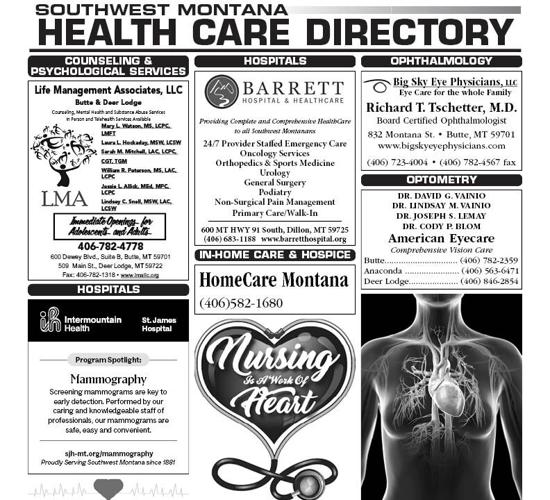
Southwest Montana Health Care Directory