

Spotlight on Stroke
Seeking care when minutes matter, plus recent advances in treatment
Dr. Felix Chukwudelunzu
Mayo Clinic News Network
If you’re 55 or older, you’re at greater risk of stroke. A stroke is a medical emergency. It happens when either the blood supply to the brain is blocked or a blood vessel in the brain leaks or bursts. In both cases, brain cells begin to die in minutes, so it can be life-changing to recognize the symptoms in your friends and family.
Stroke risks
In addition to age, lifestyle factors ranging from being overweight, physical inactivity, heavy drinking, smoking or being exposed to secondhand smoke and using illegal drugs such as cocaine and methamphetamine can contribute to your stroke risk.
There also are medical conditions that increase your stroke risk, including:
- High blood pressure.
- High cholesterol.
- Diabetes.
- Obstructive sleep apnea.
- Cardiovascular disease.
- Personal or family history of stroke or heart attack.
- COVID-19 infection.
- Taking birth control pills or hormone therapy.
Men are at higher risk, as are African American and Hispanic people. Women are more likely to die of a stroke than men.
Time is critical
The American Stroke and Heart Association has created an easy way to remember stroke symptoms: BE FAST.
Here’s what each letter stands for:
B Balance or coordination: Sudden onset of walking like you’re intoxicated, and not being able to grasp or turn a doorknob with one of your hands, are just two examples.
E Eye: Sudden onset of double vision, loss of vision in one or both eyes, or not being able to see the full visual field can indicate a stroke.
F Face: Sudden onset of one side of your face drooping. A limb on that same side also may become weak.
A Arm: Sudden onset of weakness or complete paralysis in one arm or leg. One way to test for arm weakness is to have the person hold both arms straight out in front of them. Be concerned if one arm begins to drift downward on its own.
S Speech: Sudden onset of slurred speech, or trouble finding words or speaking gibberish.
T Time: It’s estimated that a person loses 1.6 to 2 million brain cells every minute when blood supply to the brain is affected, so time is brain.
Because time is critical when a person has a stroke, call 911 for immediate care and transportation to an emergency department. However, if you’re living in a rural area, too much time may elapse before help arrives. Give the person one tablet of aspirin, preferably a low-dose aspirin (about 81 mg), then safely drive them to the closest emergency department. Tell staff that you suspect a stroke.
If your medical facility doesn’t have a comprehensive or primary stroke center, the healthcare team may connect via audiovideo technology with a stroke neurologist who can examine the patient and recommend treatment options.
Treatments
Treatments have advanced significantly in the past 30 years. The first breakthrough was the development of clot-busting medications that can dissolve the clot that’s blocking blood flow in the blood vessel. For the best outcomes, patients are carefully selected for this treatment.
For some patients, endovascular intervention is a newer and additional treatment option. It’s typically performed within 24 hours of the onset of symptoms. A CT or MRI scan of the blood vessel can pinpoint the blood clot. Using guided imagery, a neurointerventionist threads a thin wire up through an artery in the groin to the brain, grasps the clot, removes it and opens the affected blood vessel.
In addition to treatments, other factors contribute to better recovery from stroke while patients are in the hospital. These include controlling their blood pressure, ensuring their blood sugar is neither too high nor too low and maintaining a comfortable body temperature — not too hot or too cold. Their care team will develop a recovery plan for them once they return home.
Significant strides also have been made to ensure patients don’t have another stroke. These include controlling blood pressure and diabetes and treating obstructive sleep apnea. Patients also typically are prescribed a blood thinner to reduce the chance of clots forming. New developments in these medications, such as apixaban, make them simpler to take without regular blood tests.
The best stroke care is still avoiding a stroke by reducing your risks. But if a stroke happens, remember: BE FAST.
Hospital launches detox unit to address state crisis
David Erickson
david.erickson@missoulian.com
Community Medical Center in Missoula has announced a new medical detox program designed for adult patients who require acute management of withdrawal symptoms from alcohol or opioids.
The need for the service is “urgent,” according to hospital CEO Greg Cook, saying there’s a substance use crisis in the state.
According to the Montana Substance Use Disorders Task Force, formed by the Department of Health and Human Services, an estimated 79,000 Montanans struggle with addiction. Alcohol is the most common drug of choice.
For people who want to stop drinking, there are physical dangers that come from quitting. For people with a history of high-volume alcohol use, withdrawal can cause seizures, severe vomiting, tremors, hallucinations and sometimes even death. Many people find the withdrawal so physically distressing that they relapse before completing the process without medical management.
That’s why Community, starting on July 6, will offer an inpatient, hospital-based withdrawal management program that lasts three to five days. The service will be available through self-referral, and participants will receive round-the-clock monitoring and protocol-specific medications to reduce the severity of withdrawal symptoms.
Cook said there are very few medically-supervised options available in western Montana.
“So, as we look at how we take care of our community, which is our mission, making communities healthier, med detox is one that really stuck out as a community need,” Cook said.
He said the hospital’s clinical team will approach alcoholism and substance use disorder as a chronic illness, a lot like diabetes or heart disease. Designated nurses and physicians will watch over patients.
A service coordinator will also work with each patient to develop a discharge plan that would include appropriate referrals to the next level of care.
“It’s important to me that if a patient comes to the program, that they have that (next level) set up before they’re admitted,” Cook explained. “Otherwise, it just becomes a revolving door. They come in, they detox, they go home, they relapse. They come in, they detox, and it doesn’t do any good. So we want a program where they come in, have a safe place to detox, and then receive treatment after the fact, so they can really turn their life around.”
Patients will go through a screening process via telephone to determine if they’re a good fit for the program, which will be called StepOne Service.
The hospital will work with Evergreen Healthcare Partners to deliver the detox service. Cook said he’s worked with the company in the past.
“We’ve had in the past huge success,” he said. “We’ve had families get their children back. Just all kinds of very positive things that we’ve seen from this program, so we’re excited about it.”
Megan Condra, the director of marketing and community relations at Community, said the only other options in western Montana are all “private pay” models, meaning they don’t accept Medicare or Medicaid. Condra said that their program will be covered by most insurance plans currently accepted by Community, and payment plans are available.
She said Evergreen has rate of 80% of patients completing the detox program and continuing on with detox treatment.
Cook said most existing treatment settings in Montana are designed for individuals who have already completed detox. One program that accepts Medicaid and Medicare is located in Billings, which isn’t a great option for people on this side of the state. There is also a facility in Spokane, which is about three hours away over a few mountain passes.
Cook said the team at Community is hopeful about making a difference.
“Addiction doesn’t discriminate, it touches families at every income level, every age group, every walk of life here in Montana,” Cook said. “What we know is that it is a medical condition that can be treated, and recovery is possible. This program is about making sure that when someone is finally ready to ask for help, we have something to offer them, right here at Community Medical Center.”
David Erickson is the business reporter for the Missoulian.

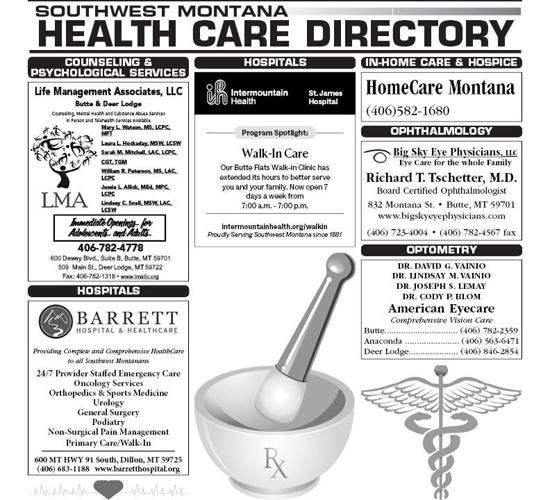
Southwest Montana Health Care Directory