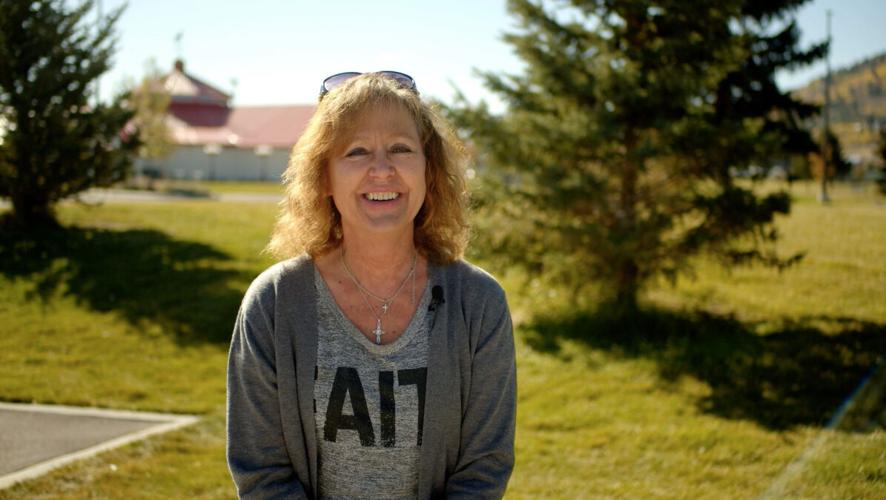


Carole McGivern
Carole McGivern’s Thursdays are filled with laughter and imagination as she babysits her great-nephew Grey and great-niece Sienna. Their trampoline becomes a ship, and the grass turns into an ocean teeming with imaginary fish. It’s a cherished routine — one she feared she might lose when a routine mammogram revealed she had breast cancer.
“I was shocked, speechless,” McGivern said. “My husband was too. My children didn’t know what to expect. My daughter was getting married that year, and I wondered, ‘Am I going to be there?’”
Despite no family history or genetic markers for breast cancer, McGivern had always been diligent about her annual mammograms. That vigilance paid off. Though she regularly performed self-exams, she didn’t realize a small dimple could be a warning sign. Fortunately, the mammography tech recognized it and immediately initiated the next steps.
McGivern’s care journey began with Jodi Lubick, oncology patient navigator at Intermountain Health St. James Hospital, guiding her through the process, starting with a biopsy that revealed two separate masses.
Once the diagnosis was confirmed, McGivern met with Dr. Marwan Massouh, a medical oncologist at the St. James Cancer Center. Lubick then helped schedule a lumpectomy, followed by six weeks of radiation therapy with Dr. Jeffrey Gilroy, a radiation oncologist.
“Carole had an interesting case,” said Dr. Gilroy. “Her biopsy led us to do an MRI, which revealed a larger tumor than we typically find during routine mammograms.”
The tumor was classified as T2, meaning it had grown into the muscle layer but had not spread to lymph nodes. It was slow growing, which may explain why it wasn’t detected the previous year. After surgery and lymph node sampling, McGivern’s Oncotype DX test showed she didn’t need chemotherapy — just radiation therapy, which she could receive locally at St. James.
“Years ago, we would’ve recommended chemotherapy for her tumor size,” said Dr. Gilroy. “But advances in genetic testing now help us determine who truly benefits from it.”
Although she was initially nervous, her radiation treatments were more manageable than she expected. “It takes longer to get undressed than to have the treatment,” she joked. “The staff was wonderful. They talked me through everything and gave me all the creams for the burns. My friends brought me gifts and lotions — it was a team effort.”
Dr. Gilroy praised McGivern’s resilience. “Her journey wasn’t typical, but she was a fantastic patient throughout.”

Carole McGivern with her great-niece Sienna
Both McGivern and Dr. Gilroy emphasize the importance of annual mammograms for women over 40. They also highlight the value of having a comprehensive cancer center in Butte.
“It’s wonderful to be part of a close-knit community cancer center,” said Dr. Gilroy. “Patients can see their oncologist, get chemotherapy and radiation — all in one place.”
McGivern agrees: “Being able to stay home, care for my family and receive treatment locally made all the difference.”
To learn more or schedule a mammogram, visit sjh-mt.org/mammography.