


You can’t cheat Mount Everest.
Trudy Healy’s years of hiking mountains throughout the Northwest and her indomitable self-confidence were no matches for the soaring peak the Sherpa call the “goddess mother of the world.”
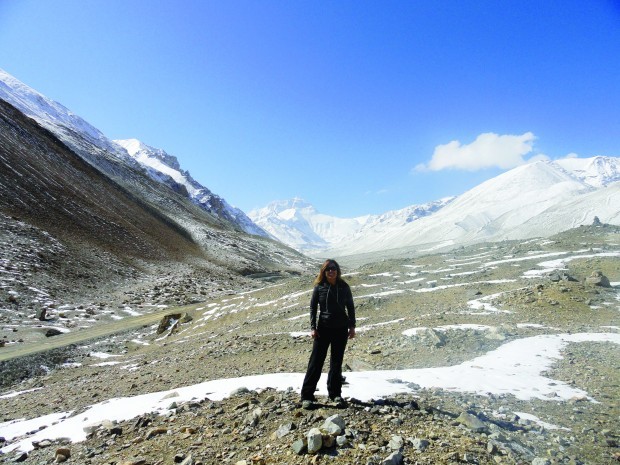
Healy’s iron will was put to the test earlier this spring when she trekked the highest mountain in the world. The 49-year-old massage therapist from Butte had a harrowing adventure on the mountain that literally left her breathless.
“I was humbled by the mountain, but I wasn’t beaten,” she told The Montana Standard recently from her office at Integrative Healthcare Services in Butte.
The intent was never to summit the mountain, but rather to hike its trails. Still, it was no easy task.
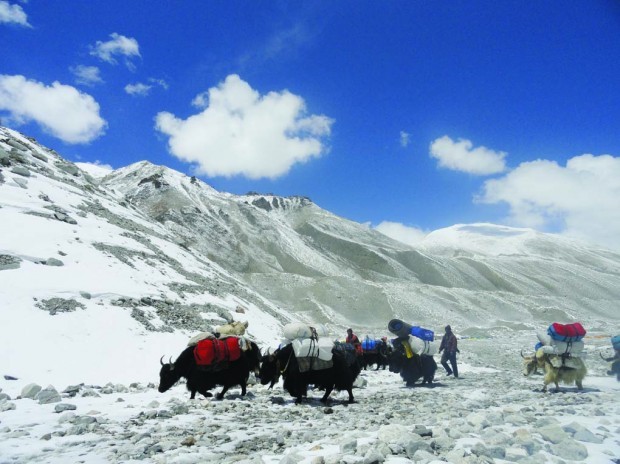
Healy went with a team of nine trekkers to trudge up Mount Everest in late April and early May. Trekking is
People are also reading…
hiking in high elevation. And at just over 29,000 feet above sea level, Mount Everest offers plenty of elevation.
She believed she was ready for the hike.
“Physically, I trained for it for a year straight,” Healy said.
The one thing she wasn’t completely prepared for was the low level of oxygen in the high elevation. To trek or climb in that elevation, people have to go through an acclimation process. This means she and her team had to take time to get used to the thin air.
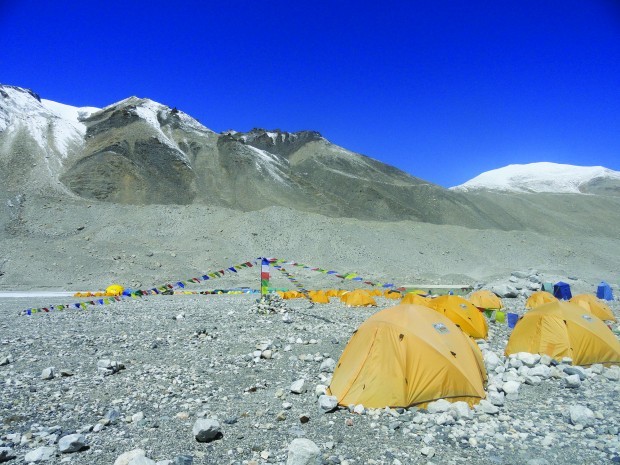
At 12,000 feet above sea level, the air contains 70 percent oxygen, Healy explained. The Chinese base camp from where her team started its trek was at 17,000 feet — only a 50 percent oxygen level.
Confident in her trekking skills, Healy admits she “pushed it,” and started hiking well ahead of her other teammates.
“I was the strongest of the team, and with that ego I decided to cheat,” she said.
It’s a rule at that altitude that trekkers need to drink at least a gallon of water a day. With every breath a trekker loses water, so dehydration comes quickly.
Healy had a personal problem with this rule.
As only one of two women on her trekking team, Healy admits she was too modest about having to urinate around so many men. So she “cheated” by not drinking as much water as she should have. The result wasn’t good.
While half way up to the 21,000- foot mark, she began having trouble breathing.
“I went to the team leader and said, ‘I’m having a bad day,’” she said.
It turned out to be a pulmonary edema, or an accumulation of fluid in her lungs.
The combination of ascending too quickly and not properly hydrating brought on her breathing problems.
It was determined that she would have to go back down to the 17,000-foot level. All she did at that point was rest and drink as much water as possible. She wanted to continue her trek, but she had to get her water-saturation level up. It requires at least a saturation level of 75 percent; Healy’s was at 60 percent. She would have to wait at the base camp.
“By the second night I’m coughing blood and my lungs are gurgling,” she said.
She kept this a secret, because she wanted to stay on the mountain.
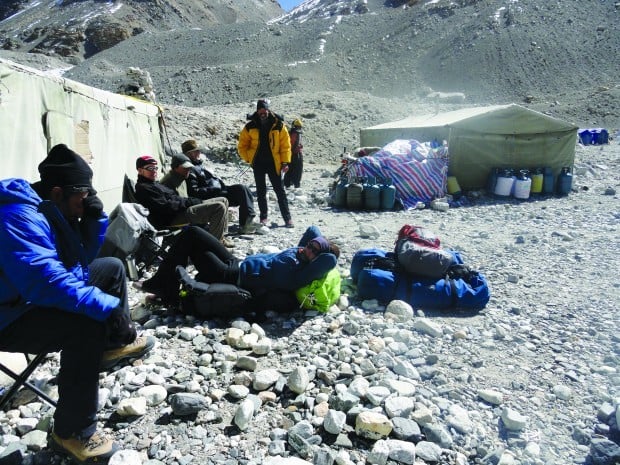
She remained at the base camp and her condition improved slightly as the days went by. She talked with fellow trekkers and mountain climbers, and enjoyed hearing their many stories of Mount Everest. These included tales of climbers losing friends and loved ones to this perilous peak.
“There are so many stories of death on that mountain, but they keep coming back,” Healy said.
It’s a feeling that Healy says she understands, even though she can’t explain it. The mythical mountain has
an inexplicable appeal to those who encounter it. And despite her hazardous meeting with this mountain, Healy says she plans to try it again next year. This time, she says she will have learned from her mistakes.
“There’s something in you that makes you want to go back,” she said. “It’s like trying to explain why you love your kid. You don’t know; you just do.”
John Grant Emeigh may be reached via e-mail at john.emeigh@lee.net.


