


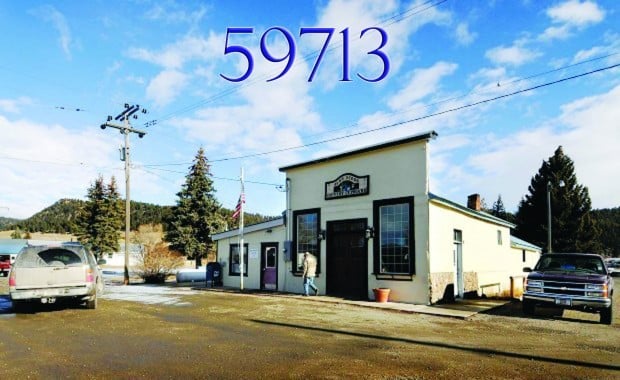
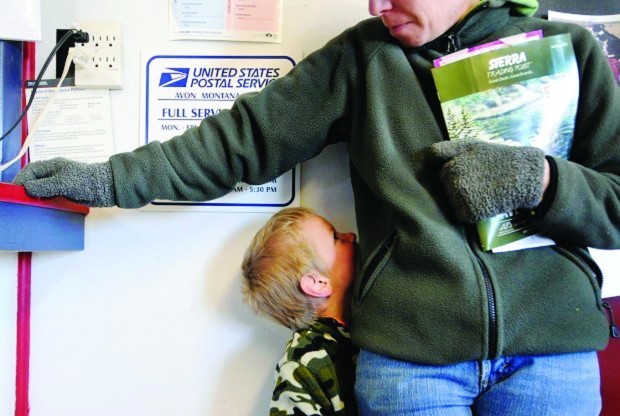
AVON — The United States Post Office here offers most
of the same services as its counterparts in larger
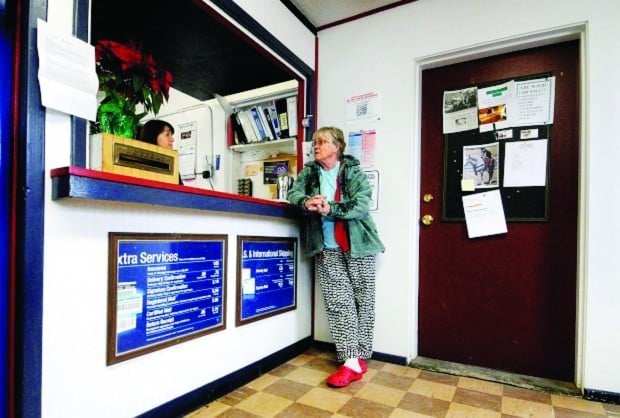
communities. You can pick up your mail, purchase stamps, send off packages.
And then there are the things you probably won’t find in many other post offices in America.
Tootsie Rolls for the youngsters who come in with their
parents, dog biscuits for the four-legged critters who accompany their owners, a cup of coffee for adults.
Postmaster Relief Lynn Price supplies the treats and puts a pot on every morning, shortly after she arrives at work at 7:30 a.m.
There may be a regulation against it somewhere, she admits, but offering a cup of hot coffee to people picking up their mail or buying stamps was a ritual long before she took over in late 2010.
People are also reading…
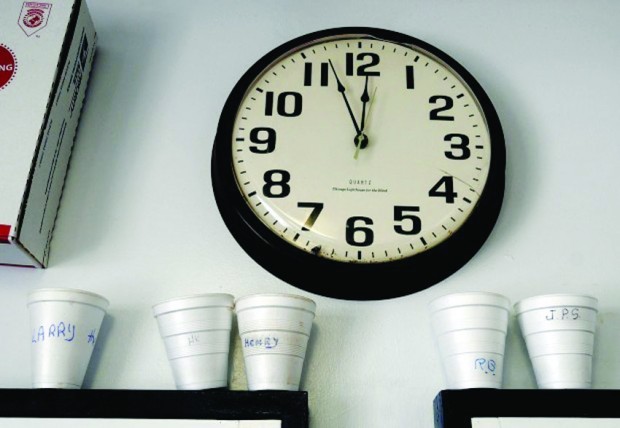
Besides, no postal inspector has ever ordered the coffee pot to disappear. Some Avon residents and area ranchers keep their own coffee cups marked and perched on ledges in the little lobby.
Save for the Avon Café, located east of town on U.S. Highway 12, the post office is the only place in this ranching community, population 110, that’s open Monday through Friday.
“It is the heart of the community,” says 70-year-old Sharon White. “Ever since the store closed, it’s where you do see other people.”
The Avon Post Office is where the bus picks up and drops off teenagers who go to high school 25 miles away in Deer Lodge, and where several of the 17 students at Avon’s K-8 school congregate when classes let out in the afternoon.
Then there’s this: Most U.S. Post Offices probably aren’t alerted when their county’s 9-1-1 system gets a call for a medical emergency or traffic accident, but Avon’s is.
That’s when the postmaster here swings the door shut on the one service window and dashes a couple of blocks to start the town’s ambulance in the winter months, so that by the time volunteers with the Avon Quick Response Unit — many who live on ranches outside town — arrive, the ambulance is warmed up and ready to roll.
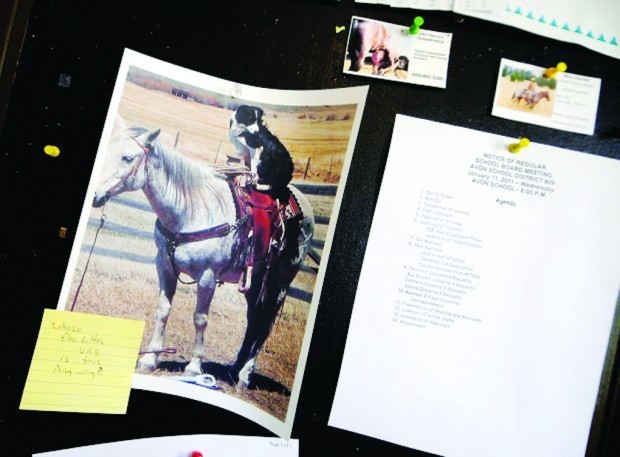
From the 40 cattle brands of area ranchers displayed above the mailboxes — that may violate some rule too - to the dogs that jump up and plop their front paws on the service counter, tails wagging as they await their treat from Price, the post office in Avon isn’t like most in America.
But it is in the same boat as 3,700 others — slated for possible closure by the financially strapped U.S. Postal Service.
saving money
The Postal Service projects it will save almost
$358,000 over the next 10 years if the Avon office is closed. There are probably similar savings associated with the other 80-plus in Montana — from Alzada to Zurich — that are also on the chopping block.
That includes another in Elliston, just 11 miles down the highway.
But if there is anyone in Avon who thinks this is a good idea, they didn’t wander in over a good chunk of a day last week.
“It’s very bad,” says Christine Hallmann, who, after a year in town, figures she and her family are still probably Avon’s newest residents. “It will make things more
difficult for everyone in Avon.”
Those who point out that more and more transactions happen online instead of through the mail probably don’t live in the rural and isolated areas where the Postal Service wants to shut down post offices, and where Internet service is spotty, some say.
“I have dial-up, but it’s real slow,” rancher John Beck says. “I’m in the post office pretty much every day.”
“I don’t see why you go into cities and see post offices everywhere,” says Heather Quigley as she picks up her mail. “Do they really need five or six post offices in town? Why can’t they close some of those, instead of our only one?”
White says she understands that things may have to change, but says there are other actions the Postal Service should look at. Has it even considered, she wonders, the possibility of halving the hours that the Avon and Elliston offices are open, and manning both with a single postmaster?
If it is closed — and congressional pressure has delayed a final decision until May 15 — Avon residents will retrieve their mail from cluster boxes in town instead of inside a building.
To do most anything else, a trip to the post office will likely mean a 50-mile roundtrip to Deer Lodge, or a 60-mile roundtrip to Helena.
The Postal Service notes that rural or contract delivery carriers can conduct most Postal Service transactions, allows that meeting the carrier at the box could be problematic, then adds that “it is not necessary to be present to conduct most Postal Service transactions.”
Price - she’s a ranch wife and mother of four who used to relieve Postmaster Bill Montgomery and took over after he retired, but has never been upgraded from “relief” status because of the possible closure - says a town meeting about the USPS proposal drew 107 people.
That would be three short of the entire population of Avon, although many came from ranches outside town that also call ZIP code 59713 home.
Most are pinning their hopes of keeping theirs and other small-town post offices open on Montana’s congressional delegation, all three of whom have argued there are better ways for the Postal Service to deal with its financial problems.
It’s one area where U.S. Sen. Jon Tester, D-Mont., and the challenger for his seat in 2012, Republican U.S. Rep. Denny Rehberg, seem to agree.
“The Postal Service should not expect to balance their books on the backs of rural America,” Rehberg has said, while Tester has termed the Postmaster General’s proposals “pretty draconian for rural America.”
When it comes to Erin Graveley, they’re preaching to the choir.
Graveley, of Avon, operates both bulk-foods and sewing businesses out of her home, and relies on the Postal Service to mail out her catalogs and deliver her products. She says she has customers from Frenchtown to Helena.
“I use the post office a lot,” she says. “If this closes, I’m looking at a 50-mile roundtrip to Deer Lodge, or 60-mile roundtrip over a pass to Helena, and I go to the post office three or four times a week. That’s a lot of gas.”
Her customers also pay by checks that arrive in the mail, and Graveley does her banking through the mail.
Not long after Graveley stops in with her 5-year-old son Finn - Mom gets the mail; he gets a Tootsie Roll - Shawn Curtis swings in.
The key to Curtis’ mailbox has been “misplaced” for as long as anyone can remember, and so Price makes the short hike from the service window - it’s eight steps at the most, roundtrip - to pull Curtis’ mail out of his box for him.
“A lot of people used to leave their keys right in the lock,” Price says, “but a few years ago some kids got into people’s mail, and the Postal Service said we can’t let them leave the keys in anymore.”
So some box-holders hide their keys in the lobby. And Curtis isn’t the only customer who drives into town to get his mail hand-delivered.
“In the winter, when people want to leave their vehicle running and their post office key is on their key ring, they’ll just have me grab it,” Price says.
“I certainly don’t want to drive to Deer Lodge,” Curtis says, “and you’ll never do everything online that you do by mail.”
An example pops into his head, and he chuckles.
“For one thing,” Curtis says, “I can’t make Lynn walk back and forth online.”
***
The Postal Service says that revenues from the Avon office have steadily declined, from $17,636 in 2007 to $12,310 in 2010.
Mail volume has gone down too.
Of course, the same arguments can be applied to virtually every post office in the country. Combined with USPS proposals to also shut down half its mail processing centers in the nation, which will delay delivery times further, some locals say the Postal Service is building its own coffin.
Nationally, many people blame Congress, which in 2006 passed a law obligating the Postal Service to pre-fund 75 years worth of health care benefit payments to retirees within 10 years - a requirement to which Congress subjected no other government organization.
It has been costing the Postal Service $5.5 billion a year since.
“Congress imposed this back-breaking mandate on the Postal Service, and Congress should reform it before we talk about massive closures and layoffs,” U.S. Rep. David Price, D-N.C., says.
Congress has until May 15 to decide.
In the meantime, the Postal Service notes that Avon residents already travel to other communities for most of their supplies and services. The post office is not located in an historic landmark. The name of Avon will be retained for addresses so the town will not lose its identity, and the ZIP code, it says, “is not expected to change.”
“The Postal Service has determined that the advantages outweigh the disadvantages,” USPS says, “and this proposal is warranted.”
But the locals say they lose more than a convenient place to purchase stamps if the post office is permanently closed.
It’s the last place, they say, that people bump into each other on a daily basis. It’s a place where they can catch up over a cup of coffee, and ranchers can hide their mailbox keys, and their kids can wait to be picked up after school.
For many, it’s a big part of their small town.
Reporter Vince Devlin can be reached at 1-800-366-7186 or by email at vdevlin@missoulian.com. Photography editor Kurt Wilson can be reached at (406) 523-5244 or by email at kwilson@missoulian.com.


